
Reviewed · MARAS AND MORAY TOURS
Maras Moray
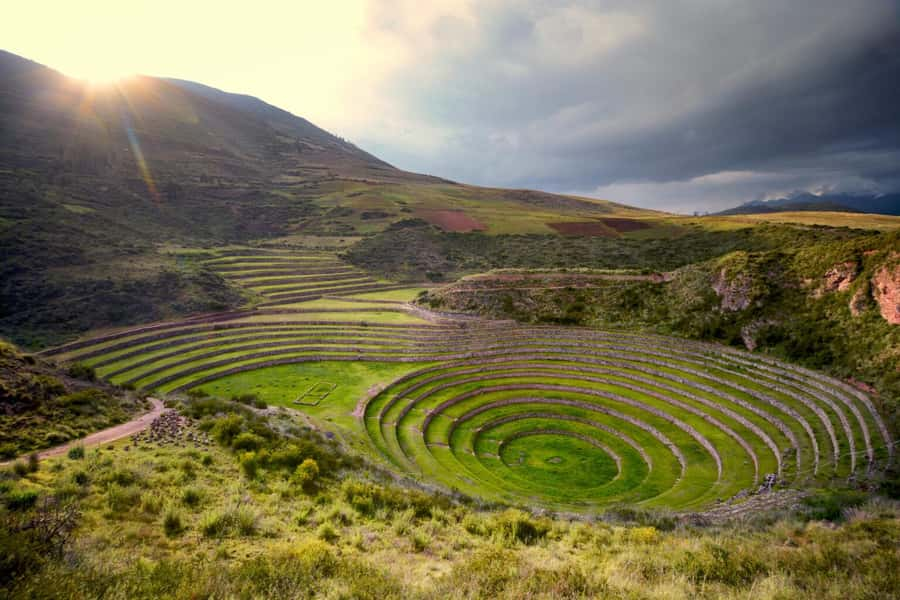
Moray’s broad circular terraces look like an amphitheater set into the earth, but their purpose was practical: the Inca used the site to test and develop crops such as corn, potatoes, and olluco. Pair that agricultural puzzle with Maras’s salt-producing plots, fed by mineral-rich springs high in the Andes, and you get a half-day that explains more than it merely shows.
I like two things here: the contrast between Moray’s engineered terraces and Maras’s working salt grounds, and the stop in Chinchero, where you can see how natural materials create dyes for llama and alpaca wool. Guide Raul has been praised for clear English translations and for making room for photo stops without rushing the group.
One consideration: Chinchero is centered on a textile demonstration and sales area, not a long stretch of free time to wander the village. If this is your first day in Cusco, altitude may also make a fast-speaking guide harder to follow, and the route does not promise stops at scenic viewpoints.
The useful details at a glance
- Three distinct stops: Chinchero textiles, Moray’s circular agricultural terraces, and Maras’s salt-producing plots.
- A manageable half-day: The tour lasts about six hours and starts with hotel pickup at approximately 8:30 a.m.
- Guide and transport included: You travel by tourist transport with a professional guide speaking English and Spanish.
- Budget for admission: The listed $18 price does not include the tourist ticket, listed at $20, or the Maras entrance fee, listed at $7.
- Bring the basics: Wear sports shoes, carry water, sunscreen, cash, and any personal medication you need.
- Not a free-roaming village visit: Chinchero’s stop focuses on the textile process, with goods for sale.
Chinchero’s natural dyes and textile traditions
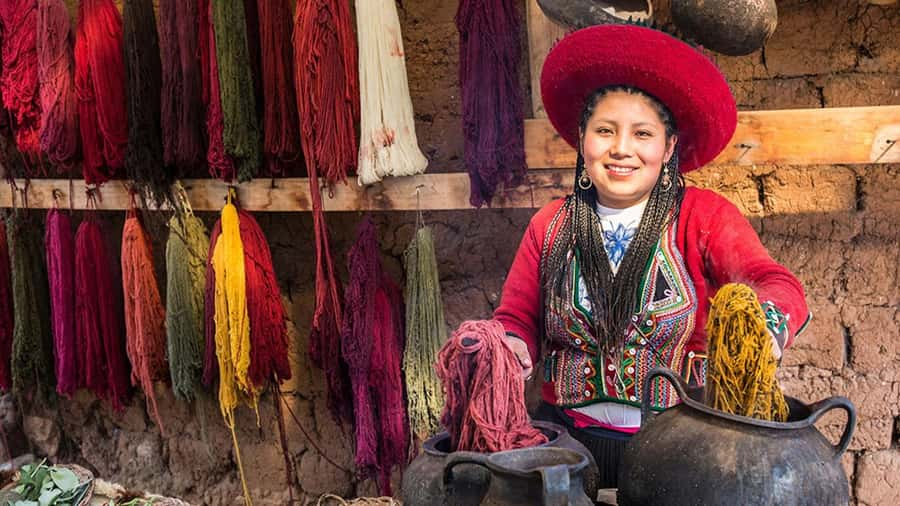
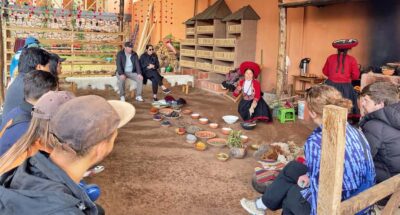
The first stop is Chinchero, a town known for textile production and techniques passed down through generations. At a textile center, you can see how natural materials are used to make dyes for wool, including llama and alpaca wool. This gives the stop a useful purpose beyond stretching your legs: it shows the work behind the color and pattern of Andean textiles.
Expect the focus to be on the process, rather than a broad visit to the town. The stop is described as a chance to see the wool-making and dyeing methods, and it includes a place where textile goods are sold. If you want time to explore Chinchero independently, ask before booking how much time the tour allows. The available details do not promise a village walk.
The sales element is worth knowing in advance. You can look at the products and decide for yourself whether anything appeals, but don’t mistake the visit for a dedicated shopping tour or a long craft workshop. The value is mainly in seeing the materials and methods explained in person.
More Maras and Moray tours around Cusco:
- From Cusco: Sacred Valley & Maras Salt Mines Tour with Lunch
★ 4.8 · 2,227 reviews - From Cusco: Moray, Maras Salt Mines & Chinchero Weavers Tour
★ 4.8 · 1,925 reviews - Cusco: Sacred Valley, Pisac, Ollantaytambo, Salt Mines Moray
★ 4.6 · 1,058 reviews
Moray’s circular terraces and Inca crop experiments
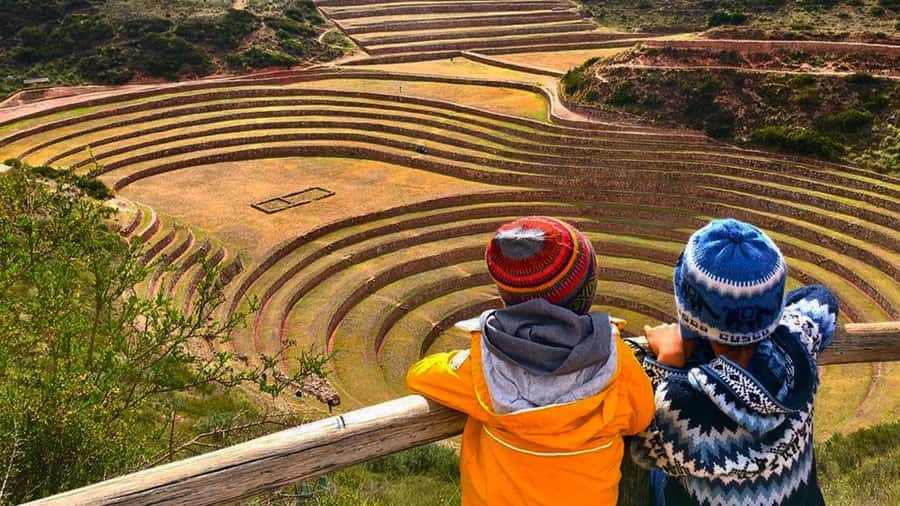
From Chinchero, the transport continues to Moray’s archaeological park. Its terraces form broad circles that descend into the ground, a shape unlike the more familiar straight-sided agricultural platforms. The site is described as unique among Inca platform constructions for its circular form.
The terraces were used as an experimental agricultural site, where crops and varieties could be cultivated and developed. The examples given include corn, potatoes, and olluco. That purpose helps you read the site as more than a striking pattern in the earth: these were carefully arranged growing spaces tied to food production.
I like that this stop gives the guide something concrete to explain. The circular layout is easy to grasp at a glance, while the agricultural purpose adds a layer you might miss if you simply take a photo and move on. A good guide can connect the shape, the platforms, and the crops without turning the visit into a lecture.
Take your camera, but allow time to look beyond the terraces. The surrounding views include mountains and snow-capped peaks, which held sacred significance as apus, or deities, in Inca times. The tour description does not promise separate photo stops along the road, so if a particular viewpoint matters to you, ask the guide whether there may be time to pause.
A practical note for your visit: the route involves getting around an archaeological site, and the tour is not suited to people with mobility impairments. It is not described as requiring high physical effort, but that does not mean every surface will be easy for every person to manage.
Maras salt plots high in the Andes
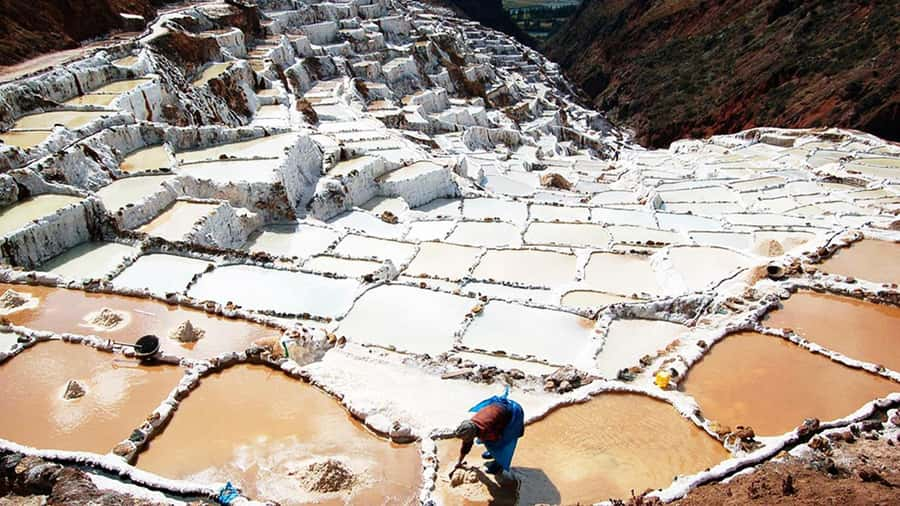
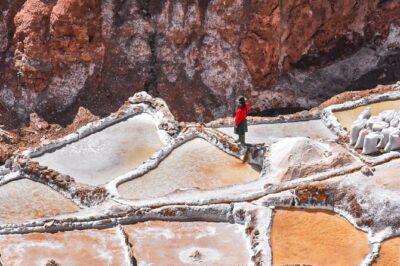
The final main stop is Maras, where natural water sources carry sodium chloride from the mountains. At more than 3,000 meters above sea level, the salt-producing grounds make a striking sight and show how a local resource is gathered at high elevation.
The appeal here is both visual and practical. Moray is about an Inca approach to growing crops; Maras shifts the focus to salt extraction. Seeing both in one outing helps you understand how people have worked with the resources around them, rather than treating the region as scenery alone.
The salt grounds are spread across approximately 3,800 production plots, according to the tour details. That scale helps explain why Maras is a major stop, not just a quick roadside look. Still, the visit is focused on the salt site itself. No hands-on salt-making activity is promised, so come expecting to observe and learn rather than take part in production.
Admission to Maras is not included in the tour price. The stated entrance fee is $7, so keep cash handy and check the current fee when booking, since prices can change. The separate tourist ticket is listed at $20 and is also excluded.
Six hours from Cusco, with pickup included
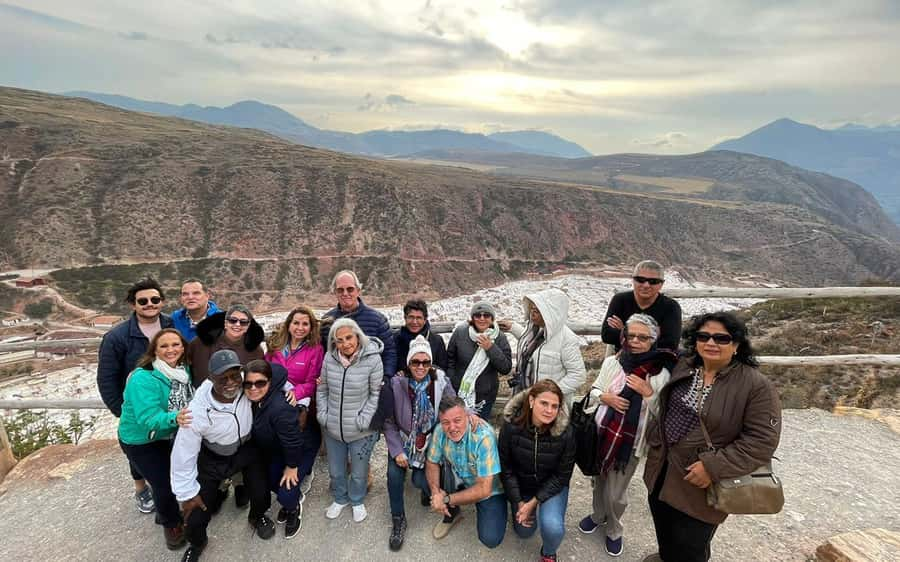
The tour begins with hotel or accommodation pickup at approximately 8:30 a.m. Be at reception five minutes before the scheduled pickup time. The guide will call your name, so keep an ear out rather than waiting outside without knowing who to look for.
The trip uses tourist transport between the stops, and the tour lasts about six hours. That makes it a good fit if you want to see Chinchero, Moray, and Maras without setting aside a full day. It also leaves less room for lingering than a private outing might, so keep expectations realistic: each stop has time limits shaped by the route and the group.
The itinerary ends with a return to Cusco. The exact return time is not specified, but a six-hour trip starting around 8:30 a.m. points to an early afternoon finish if the schedule holds. Bring a snack and a bottle of water; food is not included, and the tour lasts half a day.
The guide speaks English and Spanish. Raul is one guide name associated with this outing, and his approach has been praised for translating clearly and giving people time to take photos. One useful detail is that he explained the material in Spanish first, then came back to explain it in English. If you are concerned about the pace of the English explanation, especially while adjusting to Cusco’s altitude, mention that early and ask the guide to speak slowly.
Same base, a different kind of day out:
- Cusco: Humantay Lake Tour with Breakfast and Buffet Lunch
★ 4.9 · 2,976 reviews - From Cusco: Full-Day Group Tour of Machu Picchu
★ 4.7 · 1,767 reviews - Machu Picchu Day Trip from Cusco
★ 4.5 · 1,644 reviews - Cusco: Half-Day City Tour with Sacsayhuaman and Q’enco
★ 4.6 · 1,129 reviews
Is $18 a good price for this route?
The advertised tour price is $18 per person, which covers hotel pickup, tourist transport, and a professional English- and Spanish-speaking guide. For three separate stops and transport from Cusco, that is a modest starting price. But it is not the full amount you should budget.
The listed extra admission costs are $20 for the tourist ticket and $7 for Maras. If both apply as stated, the listed total comes to $45 per person before food or any personal purchases. The tour information describes the tourist ticket as covering the tourist points, but it does not break down which individual sites require it. Confirm what the ticket covers and whether those quoted fees remain current before you go.
That distinction matters when you compare options. The $18 headline price looks low because the required entries and meals are outside it. On the other hand, transport and a bilingual guide are included, which saves you from organizing the route and arranging separate transport between the sites.
This is best judged as a convenient, guided half-day, not as an all-inclusive bargain. If you value door-to-door pickup and explanations at each stop, the added fees may still make sense. If you prefer to linger, take extended photo breaks, or spend more time in Chinchero, compare the schedule with a longer or more flexible option.
What to bring, and who should go
Wear sports shoes, since you will be visiting archaeological and salt-production sites rather than spending the whole outing in a vehicle. Pack sunscreen, a camera, cash for entrance fees, a bottle of water, a snack, and any personal medication. Bring your passport or ID card as well.
The tour is described as low in physical effort, but it is not suitable for people with mobility impairments. If walking or moving around uneven areas is difficult for you, ask the operator for specific access details before booking. The available information does not describe the surfaces or distances at each stop.
This outing suits you if you want a compact introduction to several sides of the Cusco region: textile work, Inca agriculture, and salt extraction. It is especially useful if you have limited time or would rather have transport and a guide arranged than plan each stop yourself.
It may be less suitable if your priority is an unhurried village visit, long photo sessions, or guaranteed viewpoint stops. The route has a set sequence and the Chinchero visit centers on textiles. A little flexibility from the guide can help, but it is wise not to build your plans around unscheduled stops.
Should you book the Maras and Moray tour?
Book it if you want to cover Chinchero, Moray, and Maras in about six hours, with hotel pickup and a bilingual guide. The strongest reasons are the range of subjects and the pairing of Moray’s unusual circular terraces with Maras’s high-altitude salt production. Raul’s reported habit of allowing photo time is another plus, though guide assignments may vary.
Think twice if you want to explore Chinchero freely or need a slower pace while adjusting to altitude. Also add the stated $27 in entry fees to the $18 tour price, and set aside money for food or purchases. With those costs and limits clear, this is a practical choice for a focused half-day from Cusco.
FAQ
How long does the tour last?
The tour lasts approximately six hours. It begins with pickup around 8:30 a.m., though the exact return time is not specified.
What time is pickup?
Pickup is scheduled for approximately 8:30 a.m. You should wait at your hotel reception five minutes beforehand, and the guide will call your name.
Which places does the tour visit?
The route includes a textile center in Chinchero, the archaeological park at Moray, and the salt grounds at Maras. The tour returns to Cusco afterward.
Are transport and a guide included?
Yes. The price includes tourist transport, hotel pickup, and a professional guide who speaks English and Spanish.
Are entrance fees included in the $18 price?
No. The stated additional costs are a $20 tourist ticket and a $7 entrance fee for Maras. Food is also not included.
Is food provided?
No. You can bring a snack and a bottle of water, which is useful for a half-day outing.
Is the tour physically demanding?
The tour is described as requiring little physical effort, but it is not suitable for people with mobility impairments.
What should I bring?
Bring a camera, sports shoes, cash, sunscreen, your passport or ID card, and personal medication. A snack and water are also recommended.
Just added around Cusco
- Zipline over the Sacred Valley Trip★ 5.0 · 11 reviews
- Visit Pisac from Cusco: Private Transport★ 4.6 · 9 reviews
- TRIP FROM PUNO TO CUSCO WITH THE ROUTE OF THE SUN★ 4.7 · 16 reviews
- Vinicunca Mountain Tour – Full Day Tour to Rainbow Mountain★ 3.4 · 4 reviews
- Valle Sur Cusco | half day★ 4.3 · 3 reviews
- Trek to Choquequirao 4 days★ 3.8 · 4 reviews
- Trek to Humantay Lake from Cusco★ 4.9 · 8 reviews
- 2 Day – Short Inca Trail to Machu Picchu – Group Service★ 5.0 · 30 reviews
Maras and Moray Tours, compared.
Sacred Valley & Maras Salt Mines Tour with Lunch
Read our review →
Moray, Maras Salt Mines & Chinchero Weavers Tour
Read our review →
Sacred Valley, Pisac, Ollantaytambo, Salt Mines Moray
Read our review →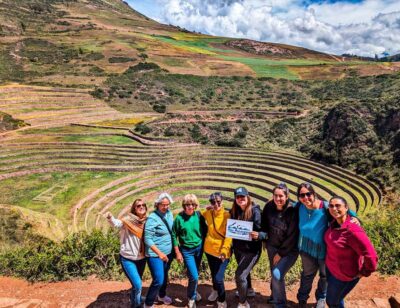
Chinchero,Moray & Salt Mines drop-off in Ollantaytambo
Read our review →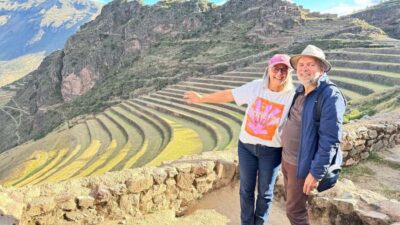

Moray, Maras Salt Mines & Chinchero Weavers Half-Day
Read our review →Browse the lists this tour appears in