
Reviewed · MARAS AND MORAY TOURS
From Ollantaytambo: Moray, Maras, and Chinchero Guided Tour
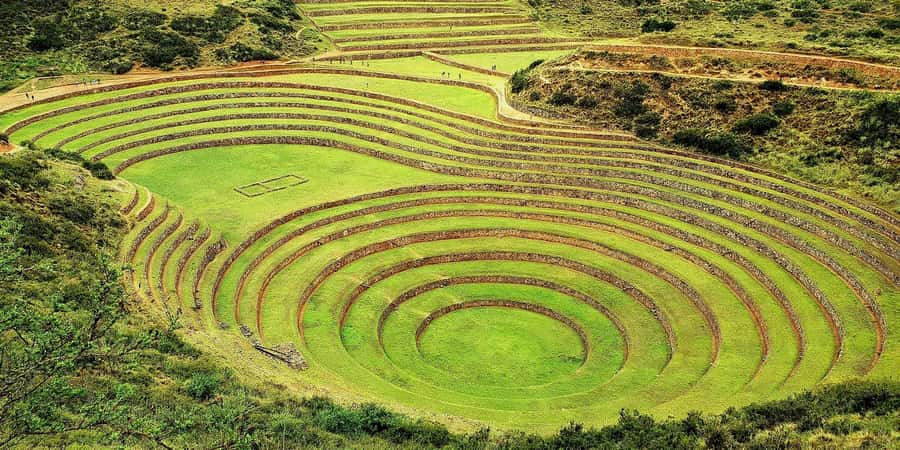
Moray’s circular terraces make a striking first stop: ring after ring drops into the earth, giving you a glimpse of how the Incas used the land to test crops in different growing conditions. This day tour links that archaeological site with Maras’s working salt pools and Chinchero’s textile traditions, all from Ollantaytambo.
I like that the stops show three different kinds of local knowledge: farming, salt production, and weaving. I also like the round-trip transport and guide, which save you from arranging separate rides and help connect the sights to the region’s history.
The main caution is communication before pickup. Some visitors had trouble getting confirmation or finding the guide at the agreed time, even when the tour itself went well. Plan to confirm your meeting details, and bring snacks: one tour returned around 15:30 after lunch at about 13:30.
At a glance
- Moray’s circular terraces show an ingenious Inca approach to farming and growing conditions.
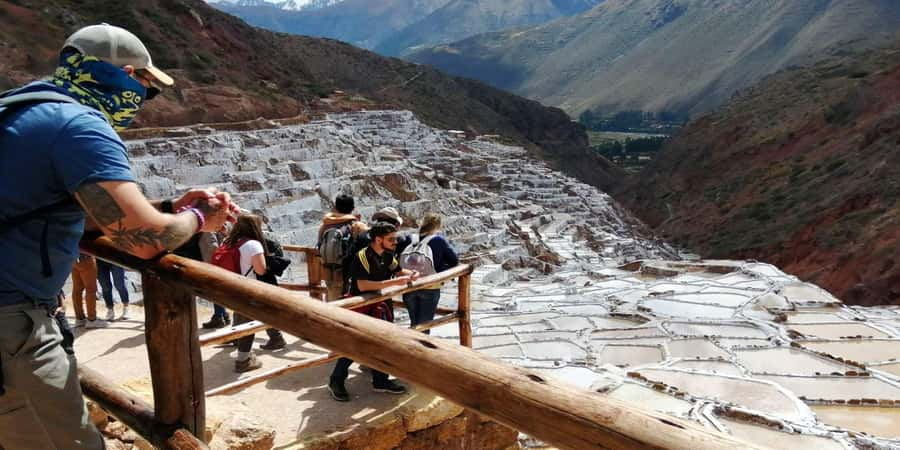
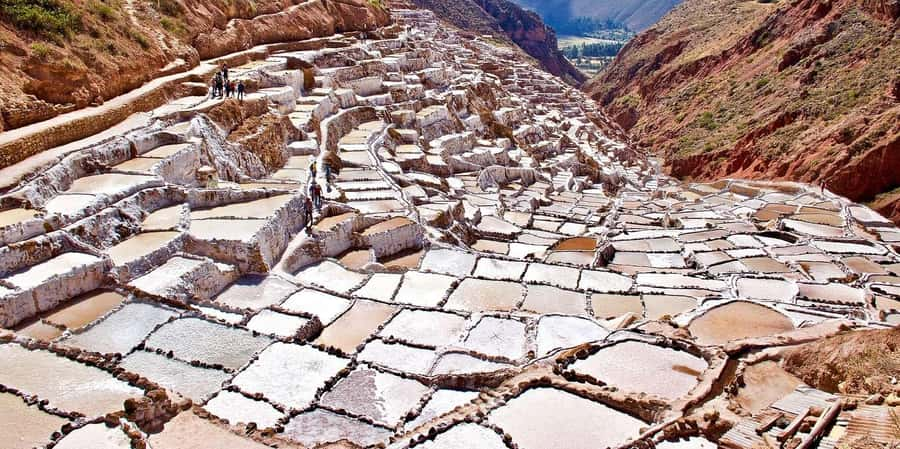
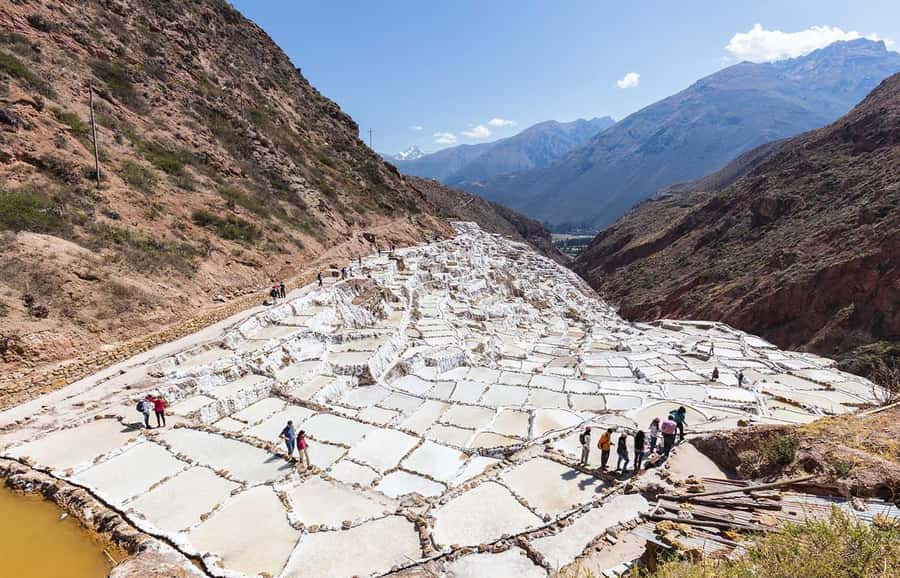
- Maras has about 2,000 salt pools, where local families still extract salt using traditional methods.
- Chinchero’s textile center demonstrates how wool and cotton are turned into yarn and dyed with natural pigments.
- The tour starts and ends in Ollantaytambo, with pickup at a meeting point and tourist transportation between stops.
- The $80 price does not cover entrance fees: budget separately for the tourist ticket and Maras salt mine entrance.
- English- and Spanish-speaking guides are available, but confirm pickup details ahead of time.
Moray’s terraces make farming history visible
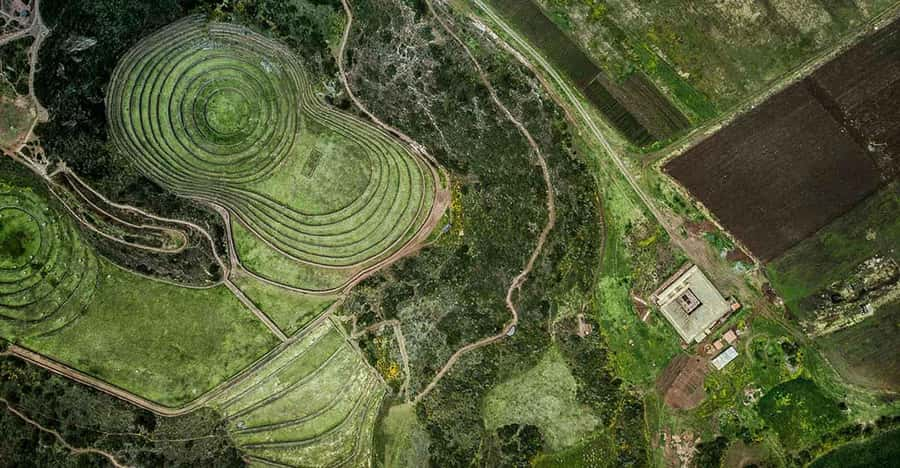
Moray is the sort of place that makes an old idea easy to picture. Its circular terraces descend in broad steps, creating different growing conditions at different levels. Your guide explains how the Incas used those microclimates as an agricultural laboratory and points out the irrigation system that served the terraces.
The site is worth seeing even if you’re not usually drawn to archaeology. The shape is memorable, and the explanation gives the view a purpose beyond its unusual geometry. Instead of seeing only a series of stone rings, you can consider how careful observation of temperature, water, and elevation helped people work with a challenging environment.
The stop also sets up the rest of the day. At Moray, you see knowledge applied to crops; at Maras, you’ll see a practical method of salt production; in Chinchero, you’ll learn about textile work. That variety gives the tour more substance than a string of scenic photo stops.
Take your time looking across the terraces, but follow your guide’s directions about where to walk. The supplied information does not give a fixed visit length, so I wouldn’t plan around a precise schedule at each site. If you want to linger for photos, ask your guide how much time is available.
More Maras and Moray tours around Ollantaytambo:
- Cusco: Sacred Valley, Pisac, Ollantaytambo, Salt Mines Moray
★ 4.6 · 1,058 reviews - Cusco:Chinchero,Moray & Salt Mines drop-off in Ollantaytambo
★ 4.8 · 793 reviews - Sacred Valley: Chinchero, Moray, Ollantaytambo & Pisac+Lunch
★ 4.8 · 501 reviews
Maras’s salt pools are still working
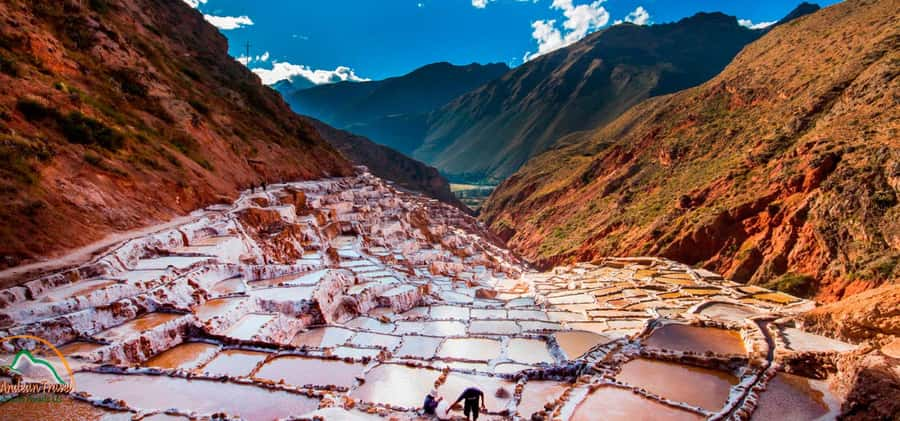
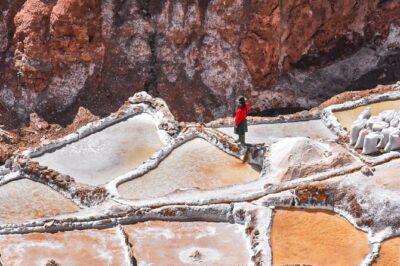
The salt mines of Maras are not simply an old site preserved for sightseeing. About 2,000 pools are still used by local families to extract salt, which makes the visit a chance to see a working tradition as well as a distinctive pattern across the hills.
Your guide explains the history of the mines and the traditional extraction methods. That context matters: without it, the pools could look like a curious patchwork. With it, you can better understand the labor and local knowledge behind the salt you see.
There is a separate entrance fee for Salineras, listed as 20 soles, so keep that cost in mind when comparing the tour’s headline price. The admission charge is not included in the $80 tour price. You’ll also want to bring a camera, but remember that this is a place where local families continue to work. Take photos with care and follow any instructions at the site.
Maras is a practical stop as well as a visual one. It brings you close to an active local industry, rather than presenting every part of the past as something finished. For me, that makes it one of the day’s most distinctive visits.
Chinchero brings textile traditions into view
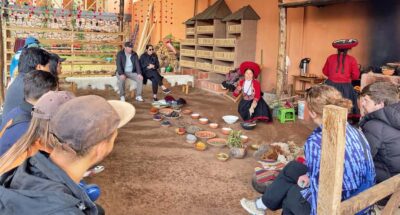
The final stop is Chinchero, where you visit a textile interpretation center. The focus is on process: how wool and cotton become yarn, and how natural pigments are used to dye it. If you’ve admired Andean textiles but never understood how their colors and fibers come together, this demonstration helps fill in the story.
I like that this stop shifts the day from large archaeological structures to skilled handwork. Textile knowledge is not just a historical subject here; the center presents techniques used in the region. Seeing the steps explained can help you look more closely at the finished cloth and appreciate the time behind it.
The tour information doesn’t promise a hands-on workshop or a chance to make anything yourself, so think of this as a guided introduction rather than a class. The value is in understanding the materials and methods, and in hearing how local practices are carried forward.
Chinchero also gives the itinerary a human scale. Moray asks you to read a monumental site, and Maras shows a working landscape of salt pools. At the textile center, the focus narrows to fibers, dyes, and the hands that transform them.
A guide can make the connections
The tour includes a professional guide in English or Spanish. That matters because the places are more rewarding when you understand what you’re looking at. At Moray, the guide can explain the idea behind the terraces and irrigation; at Maras, the traditional extraction methods; and at Chinchero, the sequence from fiber to dyed yarn.
Several guides have been singled out for their work. Juan Carlos was praised for clear English, answering questions, and taking photos. Yasmina and Yesica were also named positively. Those details suggest that the quality of the guiding can be a real strength, though the experience will naturally depend on who leads your departure.
The less dependable part has been communication before the day itself. Some visitors had difficulty getting responses to messages, and one group waited at the meeting point before the guide contacted them shortly before the start. That is a meaningful concern, especially if you have a train, another tour, or a tight plan later that day.
I’d confirm the meeting point and start time as close to departure as you can, using the contact method provided for the tour. Arrive at the stated meeting point with some time to spare, but don’t assume that silence means every detail is settled. A little advance checking can prevent an avoidable start to the day.
More Ollantaytambo tours around Ollantaytambo:
- Pisac Indian Market and Ollantaytambo Fortress with Lunch
★ 4.5 · 395 reviews - Cusco:Sacred Valley Pisaq,Ollantaytambo,Chinchero with Lunch
★ 4.8 · 183 reviews - Full-Day Excursion to Sacred Valley, Pisac and Ollantaytambo from Cusco
★ 4.5 · 174 reviews - Sacred Valley Full-Day Private Tour from Urubamba & Ollantaytambo
★ 5.0 · 112 reviews
The route and return time need some flexibility
The tour begins with pickup at a meeting point in Ollantaytambo, then uses tourist transportation to reach Moray, Maras, and Chinchero. After the final stop, you return to Ollantaytambo. For anyone already staying in town, that makes the day simpler than trying to piece together separate transport to three places.
The experience is described as one day, but there is no fixed start time in the information provided. Check availability for the departure time, and avoid making close-fitting plans for the afternoon. One reported outing had lunch at about 13:30 and returned around 15:30, but that is an example, not a guaranteed schedule.
The route can also affect how crowded the stops feel. One visitor said the group reached sites before large tour buses, thanks to its route. That may happen on some departures, but it isn’t something I’d count on. The tour’s real advantage is having transport and a guide arranged, not a promise of empty viewpoints.
Bring a snack in case you get hungry before lunch. Water, comfortable shoes, sunscreen, a sun hat, and a camera are on the recommended packing list. The stops involve outdoor sites, so shoes you can walk in and protection from the sun are sensible choices.
What the $80 price covers, and what it doesn’t
At $80 per person, the price covers pickup at the Ollantaytambo meeting point, tourist transportation, and a professional guide. That bundle is useful if you value having the route organized and want someone to explain the sites as you go. It also saves you from arranging transport between several stops yourself.
But the $80 is not the full cost of the day. The tourist ticket is listed separately at 70 soles for foreign nationals and 40 soles for Peruvian nationals. The Maras salt mine entrance costs another 20 soles. Budget for those charges in addition to the tour price, and check the ticket requirements before you set out.
One visitor advised having the Cusco Tourist Ticket, saying it was used for two locations on the route. Since the admission rules and coverage can matter to your total budget, confirm exactly which entrance fees you’ll need for your departure rather than assuming every site is covered by the tour.
In value terms, this tour makes most sense if you want a guided day with transport from Ollantaytambo and appreciate context at each stop. If you’re comfortable organizing your own transport and prefer to move at your own pace, the extra cost of a guided outing may be less appealing. The entrance fees remain an additional expense either way.
Who should choose this day trip
I’d recommend this tour if you’re based in Ollantaytambo and want to see more of the Sacred Valley without organizing three separate visits. It suits curious visitors who enjoy a mix of archaeology, working local traditions, and practical demonstrations. The stops are varied enough to keep the day from feeling like three versions of the same attraction.
It’s especially useful if you want a guide to explain the agricultural logic at Moray, the salt production at Maras, and the textile process in Chinchero. If you only want scenic views, you may find the explanations less important, though the Sacred Valley scenery along the way is part of the appeal.
This is not a suitable choice for wheelchair users. Also consider the day’s outdoor walking and the need to manage sun, water, and snacks. The supplied information does not give a group size or exact walking distances, so ask the operator if either would affect your plans.
Should you book it?
Book this tour if the convenience of round-trip transport and a guide is worth more to you than the freedom of arranging the route yourself. The combination of Moray, Maras, and Chinchero is a strong one: you get Inca farming, a salt tradition still in use, and a close look at textile techniques in one day.
Before booking, factor in the separate entrance fees and confirm the pickup details. The most consistent concern is not the sights themselves, but the possibility of weak communication before departure. If you can get clear confirmation and your schedule has room for a flexible return, this is a practical way to explore three very different parts of the Sacred Valley.
FAQ
Where does the tour start and end?
Pickup is at a meeting point in Ollantaytambo. The tour returns to Ollantaytambo after visiting Moray, Maras, and Chinchero.
Which places are included in the tour?
The itinerary includes the archaeological site of Moray, the salt mines of Maras, and the town of Chinchero, where you visit a textile interpretation center.
What languages can the guide speak?
The live guide is available in English or Spanish.
Are entrance fees included in the $80 price?
No. The tourist ticket is listed separately at 40 soles for Peruvian nationals and 70 soles for foreign nationals. Entrance to the Maras salt mines is another 20 soles.
What should I bring?
Bring comfortable shoes, a sun hat, a camera, sunscreen, and water. A snack may also be useful, since lunch timing can vary.
How long does the tour last?
It is listed as a one-day tour. A reported outing returned to Ollantaytambo around 15:30, but the exact start and finish times can vary.
Is the tour suitable for wheelchair users?
No. The tour is listed as not suitable for wheelchair users.
More Chinchero tours around Ollantaytambo
- From Cusco: Chinchero, Moray, Maras and Ollantaytambo
★ 4.5 · 83 reviews - Sacred Valley with Peru Vip : Pisac, Ollantaytambo and Chinchero
★ 5.0 · 69 reviews - Sacred Valley of the Incas – Pisaq, Ollantaytambo and Chinchero
★ 5.0 · 62 reviews - From Ollantaytambo:Moray, Salt Mines, Chinchero end in Cusco
★ 5.0 · 42 reviews
Just added around Ollantaytambo
- Transfer from Cusco to Ollantaytambo★ 5.0 · 30 reviews
- Private Tour Sacred Valley, Chinchero, Maras Moray, Ollantaytambo★ 5.0 · 29 reviews
- Super Sacred Valley with Transfer to Ollantaytambo★ 3.1 · 4 reviews
- From Cusco: Chinchero, Moray, Maras, Ollantaytambo, Pisaq★ 4.9 · 20 reviews
- Pisaq, Ollantaytambo, Chinchero – Sacred Valley Experience★ 5.0 · 6 reviews
- Sacred Valley: Ollantaytambo, Chinchero And Yucay With Lunch★ 4.5 · 16 reviews
- from Urubamba & Ollantaytambo:Sacred Valley Full-Day Private★ 4.9 · 31 reviews
- From Ollantaytambo:Private tour to Maras and Moray half day★ 4.6 · 7 reviews
Maras and Moray Tours, compared.
Sacred Valley & Maras Salt Mines Tour with Lunch
Read our review →
Moray, Maras Salt Mines & Chinchero Weavers Tour
Read our review →
Sacred Valley, Pisac, Ollantaytambo, Salt Mines Moray
Read our review →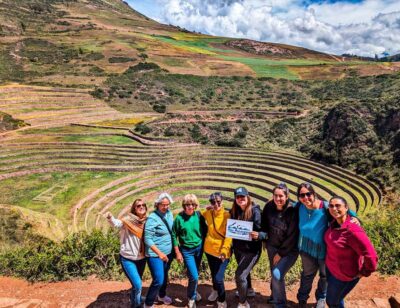
Chinchero,Moray & Salt Mines drop-off in Ollantaytambo
Read our review →

Moray, Maras Salt Mines & Chinchero Weavers Half-Day
Read our review →Browse the lists this tour appears in