
Reviewed · CUSCO CITY TOURS
Cusco Half Day City Tour: Four Ruins
Cusco’s four nearby Inca sites tell different stories in stone: Sacsayhuaman’s huge zigzag walls suggest power and defense, while Tambomachay’s spring-fed channels point to water’s ceremonial importance. Together, they make a useful introduction to the city’s Inca past without taking you far from Cusco.
I like two things here: the four-site route gives you a range of Inca architecture in one outing, and a bilingual guide can help connect the ruins to the culture and engineering behind them. The group is capped at 15, so you are not joining a large coach party.
The main catch is the extra cost of admission, listed at PEN 70 for the sites, and the time at each stop can feel short. The tour is advertised as about six hours, but one outing lasted four, so plan for some variation.
Four sites, four different questions
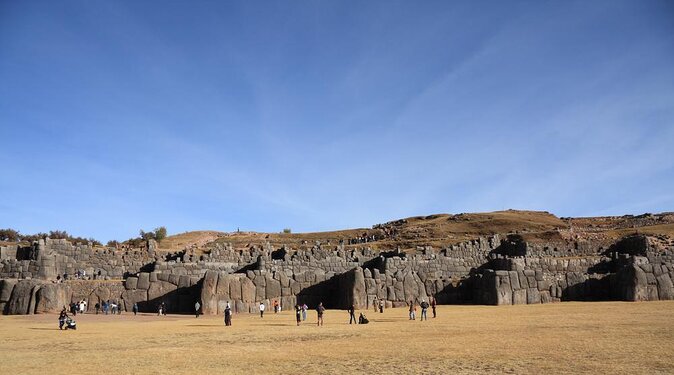
- Sacsayhuaman’s zigzag walls are built from enormous stones, some reported to weigh as much as 90 to 125 tons.
- Q’enqo’s carved channels raise an enduring question: what liquid once flowed through this rock-cut passage?
- Puka Pukara’s rooms and road suggest a practical role connected to travel, lodging, or military use.
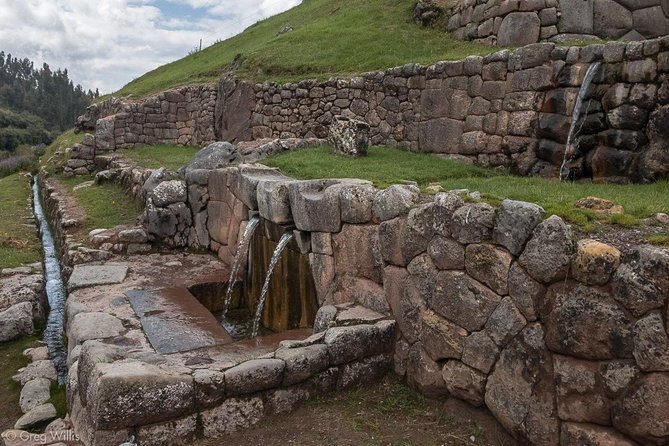
- Tambomachay’s spring water still feeds small channels and waterfalls in its stepped stone terraces.
- The group limit is 15, and the bilingual guide speaks English and Spanish.
- Budget for entry separately: transport and guiding are included, but site admission is not.
A compact introduction to Cusco’s Inca sites
This tour links four archaeological sites north of Cusco, each with a different character. You move from the imposing walls of Sacsayhuaman to the carved chambers at Q’enqo, then to Puka Pukara and the waterworks of Tambomachay. The route is useful if you have limited time or want a guided first look before exploring further on your own.
The sites are not interchangeable stops. At Sacsayhuaman, scale and stonework dominate. Q’enqo is smaller and more mysterious. Puka Pukara feels tied to movement and practical use, while Tambomachay draws your attention to springs, channels, and careful construction.
The tour begins at 10:00 am at Heidi Travel EIRL, Plateros 324, Cusco, and ends back at the meeting point. Transport and a guide in English and Spanish are included. The group maximum is 15, a reasonable size for hearing explanations and asking questions without turning the outing into a private tour.
More Cusco city tours around Cusco:
- Cusco: Half-Day City Tour with Sacsayhuaman and Q’enco
★ 4.6 · 1,129 reviews - City Tour Cusco Qoricancha Sacsayhuaman y Tambomachay
★ 4.7 · 617 reviews - Open Bus Cusco City Tour
★ 4.5 · 219 reviews
Sacsayhuaman: monumental stone above Cusco
Sacsayhuaman is the most imposing stop. Its name is often translated from Quechua as place where the hawk is satiated, and the site’s position above Cusco gives you broad views across the city and toward surrounding peaks. The Incas considered mountains such as Ausangate, Pachatusán, and Cinca sacred.
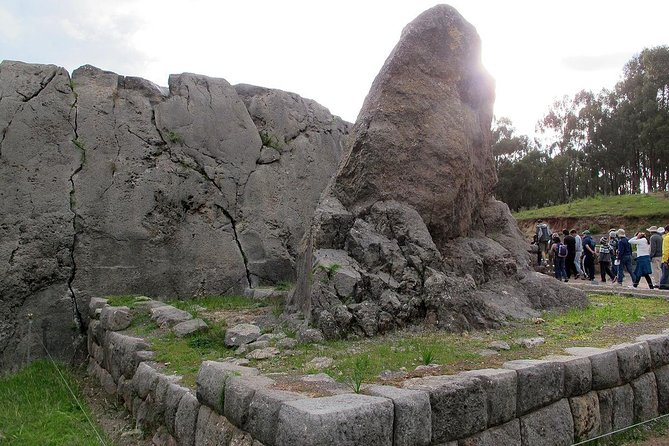
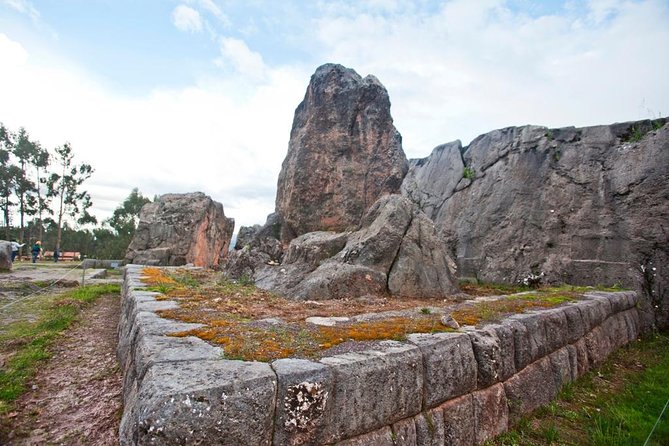
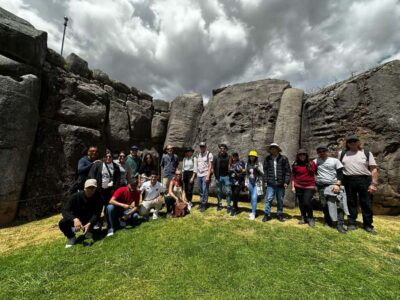
The main zigzag wall is the first thing to study. Its blocks are so large that size alone can distract from the careful fitting and the way the wall follows the ground. The largest stones are described as reaching five meters high and 2.5 meters wide, with estimated weights of 90 to 125 tons. The site also includes terraces, towers, shrines, roads, aqueducts, and other structures, so it was more than a single defensive wall.
Its original role is not settled. It may have been a fortress, a ceremonial center, or a complex serving several purposes. Spanish accounts called it a fortress, and it later played a part in the Inca rebellion at Vilcabamba. Rather than expecting one tidy answer, listen for how your guide distinguishes documented events from theories about the site’s earlier use.
The tour allows about an hour here. That is enough to get a sense of the scale and hear an introduction, but you may wish for more time to linger over the stonework or views. If walking uphill or climbing steps is difficult for you, take the site at your own pace. One family outing noted that the guide did not pressure people to climb stairs or keep up.
Q’enqo: a carved rock with an uncertain purpose
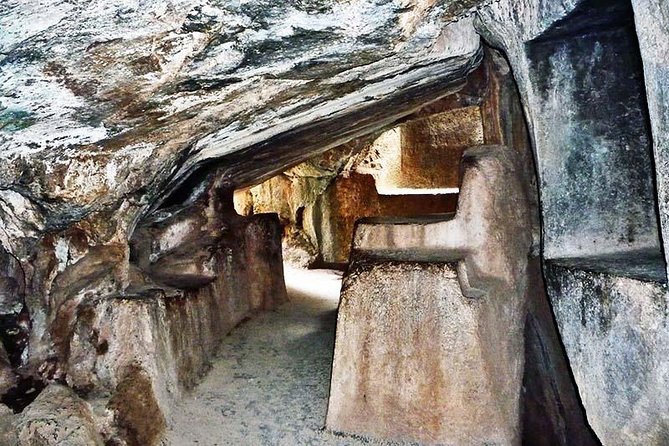
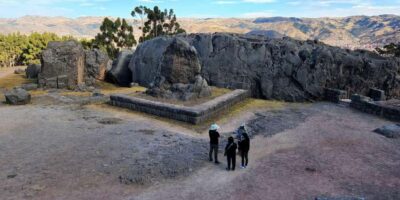
Q’enqo, whose Quechua name means labyrinth or zigzag, offers a different sort of encounter. Instead of a fortress-like outline, you find a large rock shaped by human hands, with channels, tunnels, and natural chambers worked into it. The cut channel is a central feature, but its purpose remains uncertain.
One explanation is that it carried a liquid used in ritual. Suggestions include water, chicha, a fermented corn drink, or blood. Those possibilities have encouraged theories about ceremonies connected to death or sacrifice, but the exact use is not known. A good guide can make the uncertainty part of the visit rather than presenting a guess as settled fact.
A chamber with 19 small niches is described as an amphitheater, though its original role is also unclear. Q’enqo is a good stop for anyone who likes archaeological puzzles, but it may feel brief if you hope for a firm explanation of every feature. The tour allocates about an hour, and you will want to watch your footing as you explore the rock-cut spaces.
Puka Pukara: rooms beside an ancient route
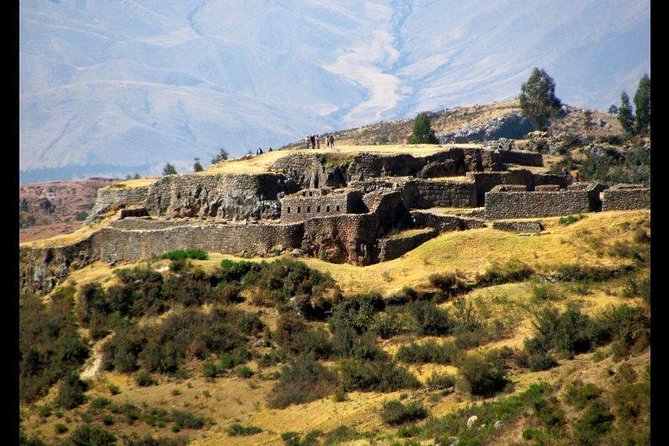
Puka Pukara means red fort, a name associated with the reddish earth and the site’s position. Its buildings use smaller, more uneven stones than Sacsayhuaman’s great blocks. The difference is useful: you see that Inca construction was not one fixed style, but adapted to a site and purpose.
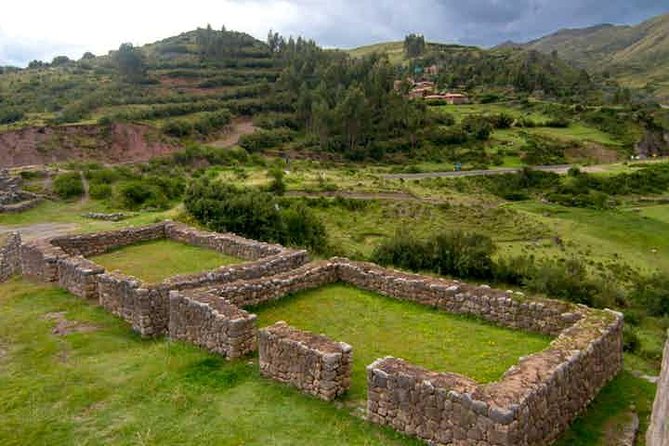
The complex has several levels, walls, rooms, platforms, canals, aqueducts, baths, and a well-known old road linked to the Qhapaq Ñan, the Inca road network. Its layout includes irregular rooms fitted around protruding rocks, along with trapezoidal spaces and broad platforms. The buildings may not look as polished as those at other Inca sites, but the arrangement appears functional.
Some chroniclers associated Puka Pukara with the Inca ruler’s visits to the baths at Tambomachay. The ruler’s entourage, including soldiers and dancers, may have waited here, giving the site a role as a barracks or roadside lodging place. A supposed tunnel connecting it to Tambomachay is also part of local lore, but should be treated as a rumor, not a confirmed feature.
You have about an hour at Puka Pukara. The stop is less visually dramatic than Sacsayhuaman, but it helps explain how travel, rest, and protection could fit into the wider Inca system. If you are most drawn to monumental stonework, this may be the least memorable stop. If you like seeing the practical side of a site, it adds welcome context.
More Cusco tours around Cusco:
- Cusco: Humantay Lake Tour with Breakfast and Buffet Lunch
★ 4.9 · 2,976 reviews - From Cusco: Sacred Valley & Maras Salt Mines Tour with Lunch
★ 4.8 · 2,227 reviews - From Cusco: Moray, Maras Salt Mines & Chinchero Weavers Tour
★ 4.8 · 1,925 reviews - From Cusco: Full-Day Group Tour of Machu Picchu
★ 4.7 · 1,767 reviews
Tambomachay: spring water in carefully set stone
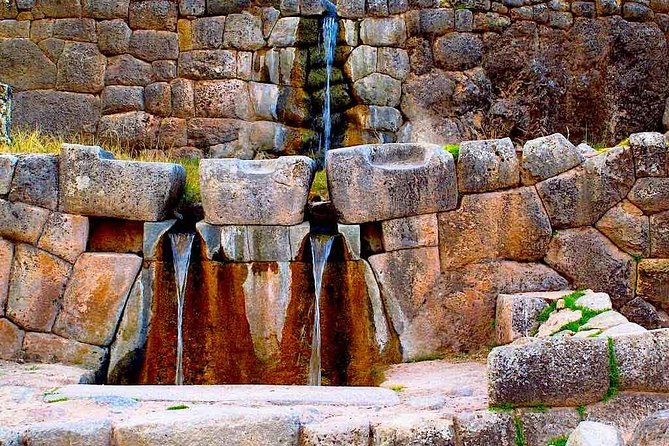
Tambomachay sits at about 3,700 meters above sea level, roughly four miles north of Cusco. Its stepped terraces and precise stonework are built over or into a natural spring. Water continues to run through small channels and waterfalls, making this the most immediately tranquil of the four stops.
The site is also called El Baño del Inca, or the Bath of the Inca. It may have served as a bathing place for the ruler or nobility, but its precise function is unknown. A ceremonial role or military use may also have been involved. The steady flow of water is a clear part of the site; the exact reasons for its construction are less certain.
The tour allows about 45 minutes here. That gives you time to look closely at the terraces and waterworks, though it is not a long visit. The high elevation matters more than the short walking distance might suggest. You may feel breathless on steps or uphill stretches if you have not adjusted to Cusco’s altitude, so walk slowly and do not feel obliged to match the pace of others.
What the guide and group size add
A guide makes the route more than a sequence of stone ruins. The key value is interpretation: at Q’enqo, for example, a guide can explain what is known and what remains a theory. At Sacsayhuaman, the guide can help you notice the difference between a dramatic wall and the broader network of buildings, roads, and waterworks around it.
The tour is bilingual in English and Spanish. Guides Edith and Freddy have been named in accounts of previous outings, with Edith praised for clear explanations in both languages and a considerate pace, and Freddy for keeping communication clear and sharing local suggestions. These are examples of guides who have led the tour, not a guarantee of who will lead your departure.
A maximum of 15 people is small enough to make questions practical, though it does not mean you will have each site to yourself. One outing had every seat in the van filled. The drives between the central meeting point and the sites were described as short, but a full vehicle can feel close, especially if you prefer extra room.
Timing, walking, and the cost to plan for
The stated duration is approximately six hours, but timing can vary. One group reported a four-hour outing, while another had a late start of about 35 minutes. That difference matters if you are arranging lunch, another tour, or transport afterward. Keep your schedule flexible rather than treating the advertised duration as exact.
You will do some walking, including uphill stretches and stairs. The guide may let you choose how far to climb, but the altitude can still make modest exertion feel harder. If you have just arrived in Cusco, consider how you are feeling before booking a day with several stops at elevation.
The tour costs $45 per person, with transport and the bilingual guide included. Site entry is extra, listed at PEN 70 per person. A separate PEN 20 charge is listed for Qorikancha, but Qorikancha is not one of the four stops described on this route, so clarify whether that fee applies to any option you are booking. The total cost is therefore more than the headline price, but the guided transport between four sites can be a good use of time if you want an organized overview.
The experience is rated 4.8 out of 5 from 30 ratings, and 97 percent of participants recommend it. Those figures are encouraging, but the practical details still matter: the entry cost is separate, duration may vary, and the tour can include an unlisted alpaca wool shop stop. One group found that stop pleasant, but if you prefer a strictly archaeological outing, ask about the route before departure.
Who should book this Cusco half-day tour?
I would choose this outing if you want to see several Inca sites near Cusco without arranging transport to each one yourself. It is especially useful early in a stay, when a guide can help you get your bearings and give you a first framework for understanding Inca architecture, water systems, and roads.
Families and couples can both make good use of it, provided everyone is comfortable with walking at altitude. The guide’s flexibility about stairs is a plus, but this is not a no-walking experience. If you want long, unhurried time at each site, a shorter-than-advertised outing or limited stop time could disappoint you.
At $45 plus admission, the value depends on what you need. If transport and a bilingual guide are worth paying for, four sites in one trip make a practical package. If you already have transport or prefer exploring at your own pace, you may want to compare alternatives. Book it for the varied sites and clear historical context, but confirm the full cost and expected timing before you set your day around it.
FAQ
Where does the tour start?
It starts at Heidi Travel EIRL, Plateros 324, Cusco 08000, Peru. The start time is 10:00 am, and the tour ends back at the meeting point.
How long does the tour take?
The listed duration is approximately six hours. Actual timing can vary, with one outing lasting about four hours and another experiencing a delayed start.
Which archaeological sites are included?
The route visits Sacsayhuaman, Q’enqo, Puka Pukara, and Tambomachay.
Is transportation included?
Yes. Transport between the meeting point and the sites is included.
Is a guide included, and what languages does the guide speak?
Yes. A bilingual guide is included, speaking English and Spanish.
Are entrance fees included in the $45 price?
No. Site admission is listed separately at PEN 70 per person. A PEN 20 charge for Qorikancha is also listed, though Qorikancha is not one of the four stops on this route.
How large is the tour group?
The maximum group size is 15 people.
Can I cancel for a refund?
You can cancel at least 24 hours before the experience’s start time for a full refund. Cancellations made less than 24 hours in advance are not refunded.
Just added around Cusco
- Zipline over the Sacred Valley Trip★ 5.0 · 11 reviews
- Visit Pisac from Cusco: Private Transport★ 4.6 · 9 reviews
- TRIP FROM PUNO TO CUSCO WITH THE ROUTE OF THE SUN★ 4.7 · 16 reviews
- Vinicunca Mountain Tour – Full Day Tour to Rainbow Mountain★ 3.4 · 4 reviews
- Valle Sur Cusco | half day★ 4.3 · 3 reviews
- Trek to Choquequirao 4 days★ 3.8 · 4 reviews
- Trek to Humantay Lake from Cusco★ 4.9 · 8 reviews
- 2 Day – Short Inca Trail to Machu Picchu – Group Service★ 5.0 · 30 reviews
Cusco City Tours, compared.
Half-Day City Tour with Sacsayhuaman and Q’enco
Read our review →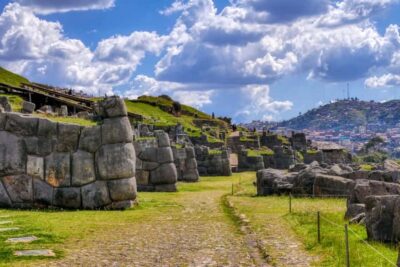
City Tour Cusco Qoricancha Sacsayhuaman y Tambomachay
Read our review →
City Tour | Half-Day Tour to 4 Archaeological Sites
Read our review →
City Tour in Cusco & visit Museum South American Camelid Private.
Read our review →
Cusco City Sightseeing, San Pedro Market, Cathedral and Qorikancha Temple
Read our review →
Browse the lists this tour appears in