
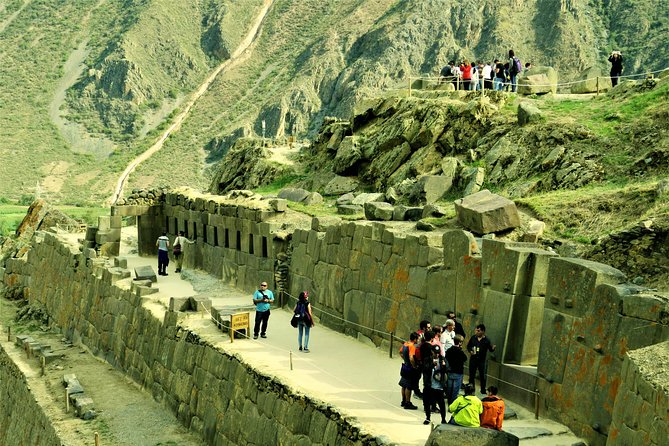
Reviewed · SACSAYHUAMAN TOURS
Cusco City Tour with Sacsayhuaman & Inca Sites – Small Group
Cusco’s story is written into its stonework: Inca walls still hold their precise lines beneath colonial buildings, while huge fortress stones crown the hills above town. This small-group tour connects those details with four nearby archaeological sites, so you can see the city’s central sights and its surrounding Inca sites in one half-day.
I like two things in particular: you get an expert guide to make sense of places that can be hard to read on your own, and the Circuit I ticket and transport to the hilltop sites are included. One caution: the outing moves briskly, with about 30 minutes at each stop, and the cathedral interior is not part of the tour.
What makes this Cusco tour useful
- A city-to-hills route: Start in Plaza de Armas, then ride to Sacsayhuaman, Qenqo, Puka Pukara and Tambomachay.
- Inca stonework up close: Compare the finely fitted walls at the 12 Angled Stone and Coricancha with the monumental blocks at Sacsayhuaman.
- A guide across six stops: Hear historical context at each site instead of piecing the route together alone.
- Key fees are covered: Coricancha entry and the partial Tourist Ticket for Circuit I are included.
- A small group, not a private tour: The group is capped at 16 people, which allows for questions but can still mean waiting for others.
- Plan around a half-day: Expect four to five hours, with roughly 30 minutes listed for each stop.
Start in Plaza de Armas and trace the Inca city
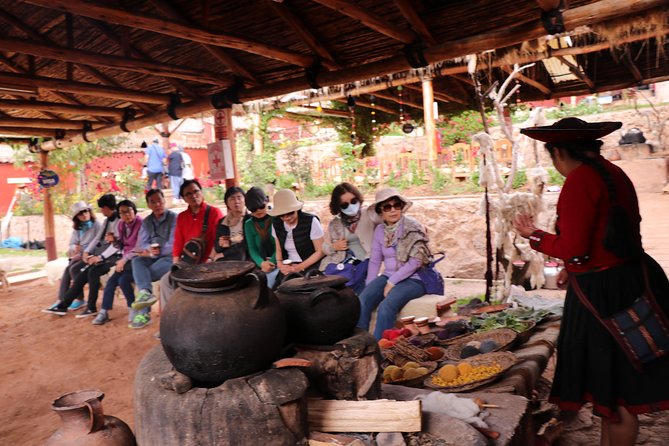
The tour starts at 1:00 pm in Plaza de Armas, Cusco’s central square. Your guide points out the colonial and Inca buildings around it and explains why this space once served as a major ceremonial center of the Inca Empire. It is a smart place to begin: you get an orientation to the city’s layered past before leaving the center.
From the square, the walk continues to the 12 Angled Stone, a well-known example of Inca masonry. Its carefully fitted edges are more than a photo opportunity. They help you notice the precision and planning that appear again at Coricancha and Sacsayhuaman.
Next comes Loreto Street, where original Inca stone walls line both sides. The street offers a glimpse of how the old city was laid out, not just how individual buildings were made. This short walk is one of the tour’s best chances to look closely at Cusco’s living mix of old stonework and later construction.
The plaza stop is listed as 30 minutes, so expect an introduction rather than a long, detailed walking tour of the center. The cathedral is among the buildings explained from the square, but cathedral entry and an interior visit are not included. If seeing its interior matters to you, plan to arrange that separately.
More Cusco city tours around Cusco:
- Cusco: Half-Day City Tour with Sacsayhuaman and Q’enco
★ 4.6 · 1,129 reviews - City Tour Cusco Qoricancha Sacsayhuaman y Tambomachay
★ 4.7 · 617 reviews - Open Bus Cusco City Tour
★ 4.5 · 219 reviews
Coricancha: where Inca and colonial walls meet
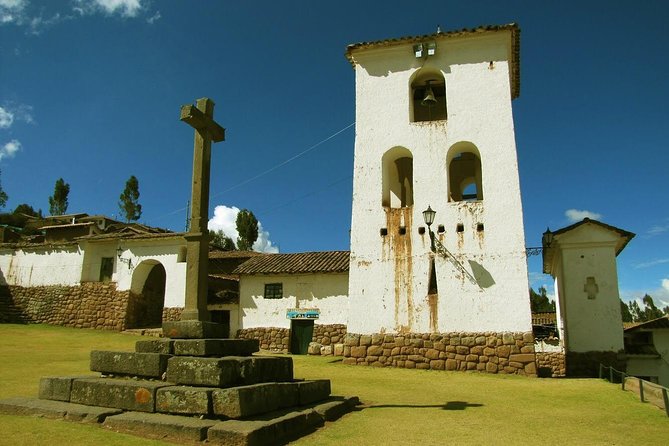
Coricancha was the Inca Empire’s leading temple dedicated to the Sun. The tour includes entry, giving you time to see the original foundations and stonework beneath the Santo Domingo convent built above them.
The site is especially useful for understanding how Cusco’s past remains physically present. Rather than viewing Inca and colonial architecture in separate settings, you can compare them in the same place. Your guide explains Coricancha’s role in ceremonies, worship and astronomy, as well as its former decoration with gold.
You have about 30 minutes here. That is enough for a guided overview and a close look at the contrast in construction, though you may want longer if you prefer to linger over architectural details. Coricancha is the one included city-center admission, so its fee is already part of the $98 price.
Sacsayhuaman: massive walls above Cusco
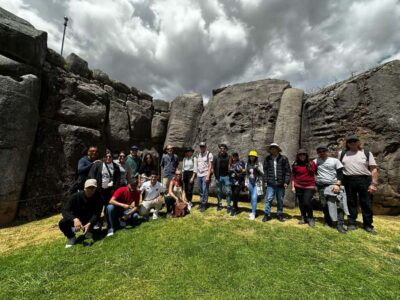
After the city stops, you travel by vehicle to Sacsayhuaman, the largest and most imposing site on the route. Its zigzag stone walls are built from enormous blocks fitted with remarkable care. Seeing the scale in person gives you a different sense of Inca engineering than the smaller masonry in the city.
Your guide discusses the site’s role in Inca battles and ceremonies, and its continuing connection to Inti Raymi, the festival held there. The hilltop setting also opens up broad views over Cusco and the surrounding mountains. Bring your camera, but give yourself time to look beyond the walls: the position of the site helps explain its importance.
The visit is listed at about 30 minutes. That keeps the whole outing within a half-day, but Sacsayhuaman is the stop most likely to leave you wishing for extra time. The site is large, and a short visit means you will focus on the main features rather than explore every corner.
Qenqo: a ceremonial site carved from rock
Qenqo is a different kind of Inca site. Instead of relying mainly on built walls, it is carved into natural rock, with winding passages, channels and altars. Its name means zigzag in Quechua, a clue to the shapes you will see as you move through the complex.
The exact purpose of Qenqo is not certain. Your guide presents theories about its ceremonial use and the spiritual meaning of the site, helping you distinguish what is known from what remains open to interpretation. That uncertainty is part of the interest: you can look at the carved features and consider how they may have been used.
The 30-minute visit is a compact introduction. Passageways and carved details reward a slower look, but the tour’s schedule gives you limited time to explore at your own pace. Wear shoes suited to walking around archaeological sites, and be ready for uneven surfaces.
More Sacsayhuaman tours around Cusco:
- Cusco City Sightseeing and Sacsayhuaman Archeological Park Tour
★ 4.5 · 101 reviews - Cusco 4-Hour Private Tour Including Sacsayhuaman and Qenqo
★ 5.0 · 77 reviews - Sacsayhuaman Temple, Tambomachay and Puca Pucara Half-Day Tour
★ 4.5 · 59 reviews - Private Cusco City Tour with Sacsayhuaman & Inca Sites
★ 5.0 · 52 reviews
Puka Pukara: a checkpoint on the old route
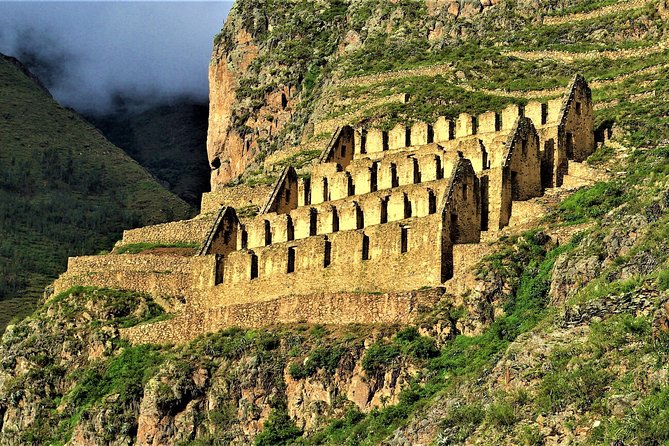
Puka Pukara means Red Fortress in Quechua. This smaller site is thought to have served as a military checkpoint and resting place along the route between Cusco, the Sacred Valley and the jungle. Its position and layout make it easier to picture the practical side of Inca travel and communication.
Your guide points out walls, rooms and guard posts, while the terraces offer open views of the surrounding area. Compared with Sacsayhuaman, Puka Pukara is less monumental. Its value is in showing how a network of smaller sites could support movement and protection around the capital.
The tour allows around 30 minutes here. Entry is listed as free, while the included Circuit I ticket covers the other named sites on this route. The distinction does not change your need to plan for the tour as a whole, but it is useful to know that the ticket is a partial one rather than a pass for every Cusco attraction.
Tambomachay: water in motion
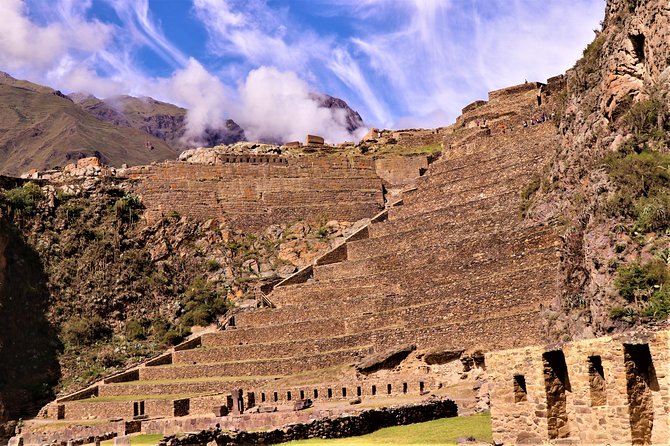
Tambomachay is the calmest-feeling stop on the route, known for its fountains, channels and careful stonework. Water still flows through its aqueducts and canals, making the site a clear example of Inca water engineering.
It is often called the Inca Baths, though it may have served as a place of rest and water worship for Inca nobility. Your guide explains the site’s possible uses and the importance of water in Inca belief. The flowing channels make the engineering easier to understand than a dry ruin would.
You have about 30 minutes to see the fountains, take photos and enjoy the setting before returning to Cusco. Tambomachay makes a fitting final stop because it shifts the focus from fortifications and stone walls to the management and meaning of water.
What $98 includes, and where the value lies
At $98 per person, the tour bundles a professional guide, transport between the city and the outlying sites, Coricancha entry and the partial Tourist Ticket for Circuit I. You also get a structured route through six stops, which can save time and simplify a day of site visits.
The price makes the most sense if you want guided context and transport arranged together. If you already have your own transport and prefer to visit at your own pace, you may value the convenience less. The tour does not include meals or snacks, travel insurance, or entry to the cathedral.
Hotel pickup and drop-off are offered for the Cusco Historic Center. The stated meeting point is Plaza de Armas, and the activity ends back at the meeting point. Confirm the exact pickup arrangement for your accommodation when you book, especially if you are staying outside the historic center.
Pace, group size and timing
The tour lasts about four to five hours, with 30 minutes assigned to each of the six stops. Those visits add up to about three hours on site, leaving time for walking between the city-center locations and driving to and from the hilltop sites. Treat the schedule as a guided survey, not an unhurried visit to every complex.
The group can include up to 16 people. That is small enough to make questions more practical than on a large coach tour, but it is not a private outing. The guide’s explanations are central to the experience, particularly at sites such as Qenqo, where the purpose is uncertain and interpretation adds useful context.
The tour information gives a 1:00 pm start, while also describing morning or afternoon departure choices. Since those details do not fully match, check the departure time offered for your selected date before booking. The advertised itinerary begins in the afternoon.
A moderate level of physical fitness is advised. You will walk through several archaeological sites, and the schedule involves repeated stops and movement between locations. The information does not specify exact walking distances or terrain at each stop, so contact the operator if you need those details to judge whether the route suits you.
Who should book this half-day route
This tour suits you if you have limited time in Cusco and want a guided introduction to both the historic center and the best-known Inca sites nearby. It is also a good fit if you would rather leave transport and the main site ticket to the operator than arrange each piece yourself.
You may prefer to visit independently if you want long stretches at Sacsayhuaman or Qenqo, or if you want to spend time inside the cathedral. The tour’s six-stop format gives you breadth, not deep exploration at every location.
The experience is operated by TreXperience. The specific guide for this departure is not named in the tour details, so you should not assume you will have a particular guide. A professional guide is included, and the maximum group size is 16.
Should you book it?
Book this tour if you want a practical overview of Cusco’s Inca and colonial layers in one afternoon, with Coricancha and the four Circuit I sites covered by the stated inclusions. Its best value is the combination of guided interpretation, transport and a route that joins city streets with the hilltop ruins.
Skip it if you want a slow, independent visit or if the cathedral interior is a priority. For most first-time visitors with half a day to spare, this is a useful way to get oriented and see a substantial range of Inca sites without having to navigate the route alone.
FAQ
How long does the Cusco City Tour last?
The tour lasts approximately four to five hours. Each of the six stops is listed at about 30 minutes.
What time does the tour start?
The stated start time is 1:00 pm at Plaza de Armas. The tour overview also refers to morning or afternoon departures, so check the time available for your selected date.
Where does the tour begin and end?
The stated meeting point is Plaza de Armas in Cusco, and the activity ends back at the meeting point. Hotel pickup and drop-off are offered in the Cusco Historic Center.
Which entrance fees are included?
Entry to Coricancha and the partial Tourist Ticket for Circuit I are included. Circuit I covers Sacsayhuaman, Qenqo, Puka Pukara and Tambomachay.
Is cathedral entry included?
No. The guide explains the cathedral and other buildings around Plaza de Armas, but cathedral entry and an interior visit are not included.
Are meals or snacks included?
No. Meals and snacks are not included in the tour price.
How large is the group?
The tour has a maximum of 16 travelers. A professional guide is included.
What level of fitness is recommended?
A moderate level of physical fitness is recommended. The tour includes visits to several archaeological sites, but exact walking distances are not specified.
Just added around Cusco
- Zipline over the Sacred Valley Trip★ 5.0 · 11 reviews
- Visit Pisac from Cusco: Private Transport★ 4.6 · 9 reviews
- TRIP FROM PUNO TO CUSCO WITH THE ROUTE OF THE SUN★ 4.7 · 16 reviews
- Vinicunca Mountain Tour – Full Day Tour to Rainbow Mountain★ 3.4 · 4 reviews
- Valle Sur Cusco | half day★ 4.3 · 3 reviews
- Trek to Humantay Lake from Cusco★ 4.9 · 8 reviews
- Trek to Choquequirao 4 days★ 3.8 · 4 reviews
- 2 Day – Short Inca Trail to Machu Picchu – Group Service★ 5.0 · 30 reviews
Sacsayhuaman Tours, compared.
Half-Day City Tour with Sacsayhuaman and Q’enco
Read our review →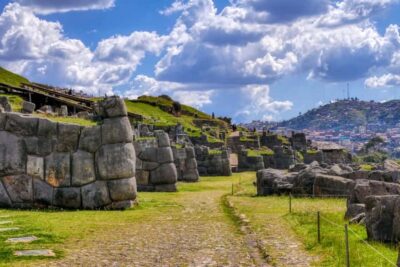
City Tour Cusco Qoricancha Sacsayhuaman y Tambomachay
Read our review →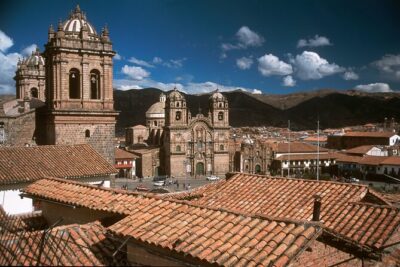
Cusco City Sightseeing and Sacsayhuaman Archeological Park Tour
Read our review →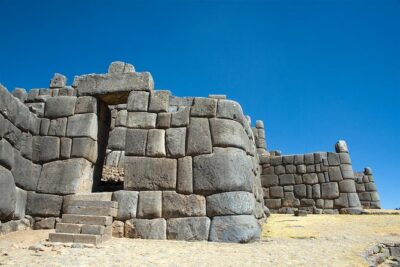
Cusco 4-Hour Private Tour Including Sacsayhuaman and Qenqo
Read our review →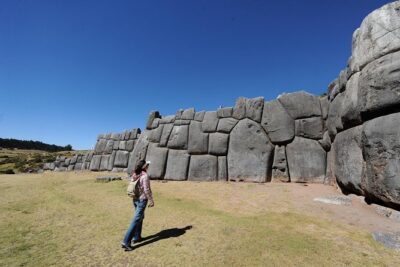
Sacsayhuaman Temple, Tambomachay and Puca Pucara Half-Day Tour
Read our review →
Private Cusco City Tour with Sacsayhuaman & Inca Sites
Read our review →
Horseback Riding Plus Tour to Sacsayhuaman, Quenqo, Puka Pucara and Tambomachay
Read our review →
Half day Horseback Riding tour around Sacsayhuaman park
Read our review →Browse the lists this tour appears in