Reviewed · CUSCO TOURS
From Cusco: Inka Suspension Bridge Qeswachaca – Qeswachaka
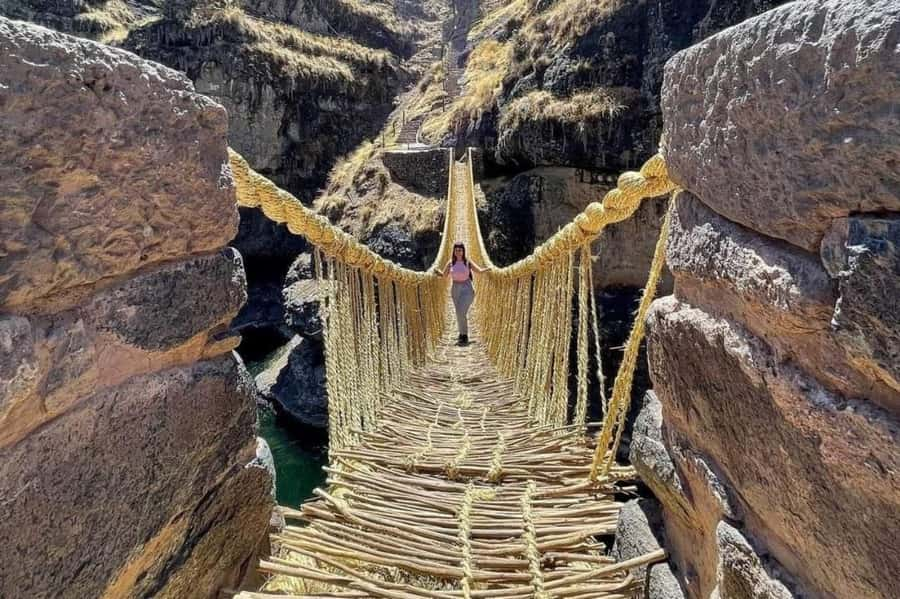
Qeswachaka is not a stone ruin behind a barrier. It is a living rope bridge over the Apurimac River, made from ichu grass and renewed each year by people from four nearby communities. Crossing it is the heart of this long trip from Cusco, and the swaying span gives you a close look at a form of Inca engineering still kept alive today.
I like two things in particular: the chance to walk across a working hand-woven bridge, and the contrast with the colonial-era bridge at Checacupe on the return. The Andean lakes add welcome quiet between long stretches on the road, while a good guide can put the bridge, its upkeep, and the surrounding region in context.
The trade-off is the day itself. Pickup begins around 4:30 to 5:10 AM, and much of the 12 hours is spent travelling; the lakes and small Pabellones Volcano may feel like padding if your main aim is Qeswachaka. Pack snacks, ask about bathroom stops, and budget separately for entry fees.
What to know before you go
- Qeswachaka is the main event: Cross a bridge of plant-fiber rope over the Apurimac River, then take in the view from above.
- Four communities maintain it: The bridge is renewed each year by residents from the surrounding communities.
- The lakes are scenic pauses, not long visits: Stops may include Pomacanchi, Acopia, Asnaqocha, and Pampamarca or Tungasuca.
- Checacupe offers a useful comparison: See a colonial-era bridge described as an Inca bridge, and note how its construction differs from Qeswachaka.
- The $47 price is not all-inclusive: Add S/20 for the suspension bridge and S/2 for the mini-volcano. A boat ride may also be offered at an extra charge.
- Expect a very early start and a full day: Pickup is between 4:30 and 5:10 AM, with the return to Cusco planned for about 5:00 PM.
The bridge is the reason to make the trip
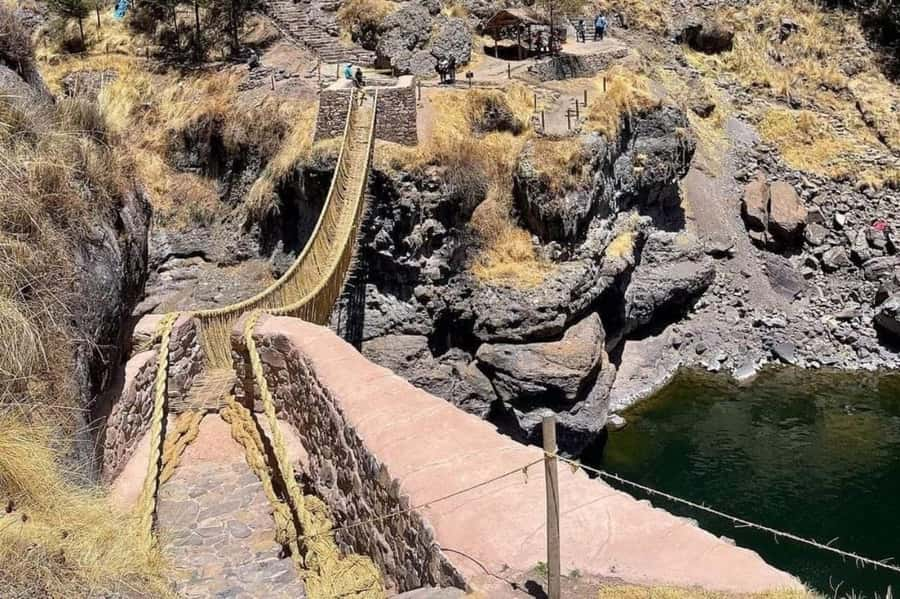
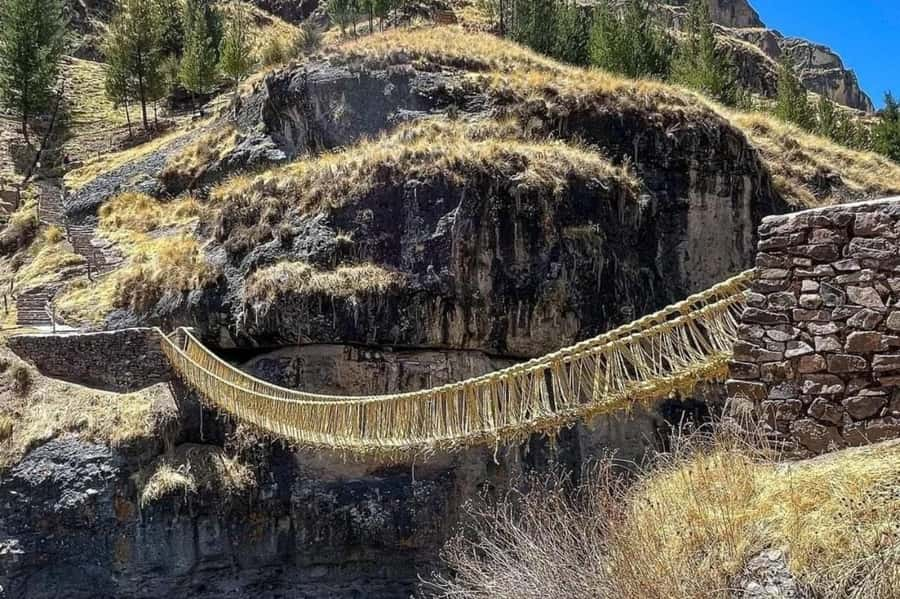
Qeswachaka is a suspension bridge built from ichu, a plant fiber found in the Andes. It stretches over the Apurimac River in the district of Quehue, and local residents from four communities renew and maintain it each year. That ongoing work makes this more than a historic structure to photograph: it is a bridge with a place in community life.
You can expect a short walk to the bridge, an explanation of its construction, and time to cross. The crossing is high above the river and can feel wobbly underfoot. If heights make you uneasy, that movement may be the hardest part. If you are comfortable with it, the bridge gives you an unusual view of the river and surrounding terrain, as well as a direct sense of how the woven structure moves.
The guided visit lasts about an hour, including sightseeing and explanations. That is not a long time on site, so keep your attention on the bridge while you are there. Look at the woven fibers, the way the span hangs, and the work involved in rebuilding it. The annual renewal is a key part of the story: this is a skill and tradition maintained through repeated community effort, not simply a relic left over from the Inca period.
A guide can make a real difference here. Roland, one of the guides associated with this tour, has explained the bridge’s construction and upkeep alongside broader subjects such as Andean climate, local flora and fauna, and life in Peru. That kind of context helps turn a crossing into a more meaningful visit. But English fluency is not guaranteed in practice, even when you book an English-language guide. If clear explanations matter to you, confirm the language before departure.
More Cusco tours around Cusco:
- Cusco: Humantay Lake Tour with Breakfast and Buffet Lunch
★ 4.9 · 2,976 reviews - From Cusco: Sacred Valley & Maras Salt Mines Tour with Lunch
★ 4.8 · 2,227 reviews - From Cusco: Moray, Maras Salt Mines & Chinchero Weavers Tour
★ 4.8 · 1,925 reviews
The lakes make a quiet first chapter
The drive heads southwest from Cusco, with the first two hours taking you toward the lake country. The tour may stop at Pomacanchi, Acopia, Asnaqocha, and Pampamarca, or Tungasuca. These stops are a chance to stretch your legs, take photos, and spend a calm moment beside the water before the main visit.
The itinerary specifies a 25-minute photo stop at Lake Pomacanchi. That is enough time for a brief look, not a lakeside walk or a long pause. The other lakes are part of the described route, but the exact timing and number of stops can vary. Keep your expectations modest: the lakes offer a change of pace and scenery, rather than a full excursion of their own.
I would treat these pauses as a bonus, not the chief reason to book. One of the strengths of the route is that it shows you more of the region beyond Cusco, with water and open Andean views breaking up the drive. The drawback is the same: if you mainly want to spend time at Qeswachaka, every additional stop competes with time on the road.
Breakfast is included, and the day also includes lunch. The meals add practical value on a remote, lengthy outing, and the buffet-style food has been described as varied. Still, meal timing can be awkward. Breakfast and lunch may be many hours apart, so bring a small snack and water rather than assuming the included meals will carry you through the whole day.
Pabellones Volcano is an optional-feeling stop
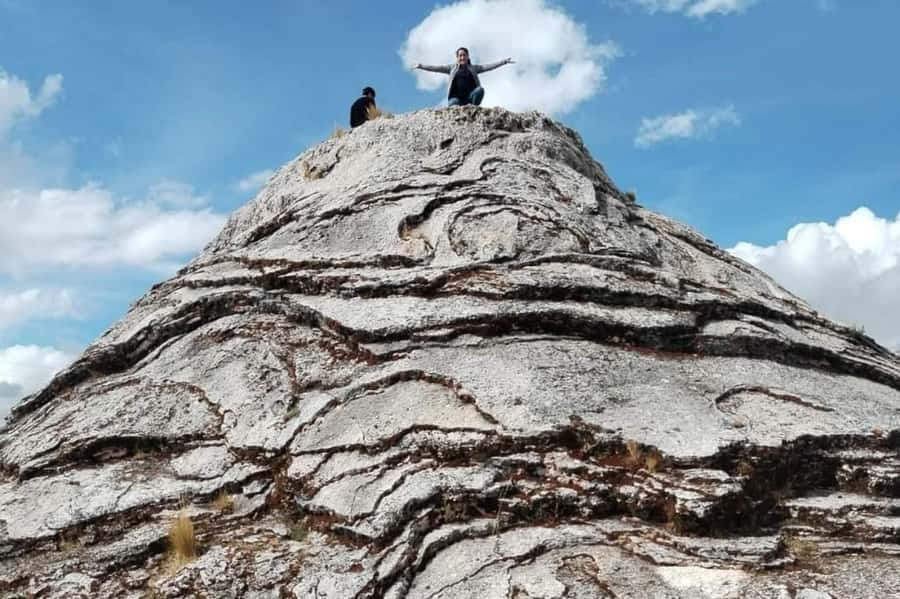
Near Yanaoca, the tour stops at the small Pabellones Volcano, sometimes described as a mini-volcano. It is a short visit, and the entry ticket costs S/2. The stop adds another point of interest to the route, but it is not the strongest part of the day for everyone.
If you enjoy seeing a range of places, the volcano may be a pleasant change from the drive and lakes. If your time or budget is tight, think of it as secondary to Qeswachaka. Some participants have found the stop less compelling than the bridge, and that is a fair way to rank the day’s sights. Ask what the visit involves before paying, so you can decide whether it is worth the small additional fee for you.
A boat ride may also be offered near the bridge. It can provide a different angle on Qeswachaka, but it is not included in the stated price, and the extra cost is not specified here. Before agreeing, ask what the ride costs and what you will see. It may be a nice change of viewpoint, but it is not essential to understand or cross the bridge.
Checacupe puts the engineering in perspective
On the return to Cusco, the tour stops at the Colonial Inca Bridge of Checacupe. This is a useful final visit because it lets you compare two bridges from different periods and built with different methods. Qeswachaka’s woven plant fibers give it a flexible, living quality; Checacupe offers a contrasting example of bridge construction.
The comparison is more than a photo opportunity. After seeing the rope bridge in use, you have a concrete point of reference for discussing materials, design, and upkeep with your guide. The stop is brief, but it helps round out the day rather than leaving the experience as one isolated attraction.
The tour is expected to finish around 5:00 PM near Plaza Kusipata, about a block from Plaza de Armas. That central drop-off is convenient if you are staying nearby or want to continue exploring Cusco on foot. Allow some flexibility in your evening plans, though: the stated return time is an estimate after a full day on the road.
Same base, a different kind of day out:
- From Cusco: Full-Day Group Tour of Machu Picchu
★ 4.7 · 1,767 reviews - Machu Picchu Day Trip from Cusco
★ 4.5 · 1,644 reviews - Cusco: Half-Day City Tour with Sacsayhuaman and Q’enco
★ 4.6 · 1,129 reviews - Cusco: Sacred Valley, Pisac, Ollantaytambo, Salt Mines Moray
★ 4.6 · 1,058 reviews
Twelve hours of travel call for a little planning
Pickup from your Cusco hotel is scheduled between 4:30 and 5:10 AM. You are asked to wait in the hotel lobby 10 minutes before your assigned time. One early pickup arrived an hour before the time given and returned at the scheduled time, so stay ready but do not panic if the vehicle is not there at the first possible minute. Confirm your pickup window and keep your phone available.
The day runs about 12 hours. The drive segments are substantial, and the route includes time at several stops, meals, and the bridge. The exact rhythm can feel uneven: long stretches in the vehicle, then relatively short visits. One account of the day described a two-hour drive before breakfast, another drive of about an hour and a half before the volcano, and roughly two hours to reach the bridge. Treat those figures as a sense of the distances, not a guaranteed timetable.
Bathroom breaks are a practical concern. They are not listed as a scheduled feature, and the long drives make it sensible to ask your guide when the next stop will be. Use the restroom before pickup, and take the chance when facilities are available. A small snack is also wise, especially if you prefer not to rely only on the timing of breakfast and lunch.
The tour includes hotel pickup, transport, a bilingual guide, breakfast, lunch, a first-aid kit, and oxygen. These inclusions matter on a high-altitude day away from the city, though they do not remove the need to dress for changing conditions or bring personal essentials. The tour is not suitable for wheelchair users.
Does $47 feel like good value?
At $47 per person, this is a fairly full day with transport from Cusco, a guide, breakfast, and lunch included. The distance to Qeswachaka is the main reason a guided outing can make sense: you avoid arranging a long route on your own and have someone to explain the bridge and the region. The included food also helps keep the day’s basic costs predictable.
But the price is not the final cost. The bridge ticket is S/20, the mini-volcano ticket is S/2, and any boat ride costs extra. Personal expenses are not included. Ask about optional charges clearly, particularly for a boat ride, before you commit to them.
Value depends on what you want from the day. If walking across Qeswachaka is high on your list, the tour gives you a practical way to reach it and adds a comparison stop at Checacupe. If you are less interested in the bridge, the long travel time and secondary stops may make the day feel expensive for the amount of time spent at the main sight.
Who is likely to enjoy this day?
I would recommend the trip to anyone curious about Inca engineering and living Andean traditions, especially if they are willing to spend a full day travelling for one distinctive place. The bridge crossing is the central reward, while the lakes and Checacupe stop add variety. It suits people who enjoy scenery along the way and do not need every stop to be a major attraction.
It is less suited to anyone who dislikes early mornings, long bus rides, uncertain meal gaps, or heights. The bridge is described as high and wobbly, and the tour’s day is built around a distant destination. If you have mobility needs, note that wheelchair users are not accommodated.
The most important thing to arrange in advance is your language expectation. The tour offers English and Spanish guides, but English delivery has varied. Confirm that your guide will speak your selected language, and be prepared for a less detailed explanation if fluency is limited. A strong guide can bring together the annual rebuilding, Inca techniques, local communities, and the wider Andean setting. Without that context, the bridge is still striking, but the visit may feel shorter and less informative.
Should you book Qeswachaka?
Book this tour if crossing the hand-woven bridge is the goal and you are comfortable trading a full day for it. The annual work by four communities, the river setting, and the chance to compare Qeswachaka with Checacupe make this a distinctive outing from Cusco.
Skip it if you want a relaxed day with little road time, or if the lakes and mini-volcano are more appealing to you than the bridge itself. Before booking, confirm the guide language, clarify any optional boat charge, and plan for the separate entry fees. With those points settled, you can judge the $47 fare against the experience that matters most: stepping onto a bridge still woven by hand.
FAQ
How long is the tour?
The tour lasts about 12 hours. Pickup begins between 4:30 and 5:10 AM, and the return to Cusco is planned for around 5:00 PM.
Where does the tour pick me up and drop me off?
Hotel pickup in Cusco is included. The tour finishes at Plaza Kusipata, about a block from Plaza de Armas.
What languages are offered?
The live guide is listed as speaking English and Spanish. English fluency has varied, so confirm your preferred language before departure.
What meals are included?
Breakfast and lunch are included. Personal snacks and other personal expenses are not.
How much are the extra entrance fees?
The Qeswachaka bridge ticket costs S/20, and the mini-volcano ticket costs S/2. Personal expenses are also excluded.
Are the lakes included in the route?
The route may include Pomacanchi, Acopia, Asnaqocha, and Pampamarca or Tungasuca. The itinerary specifies a 25-minute photo stop at Pomacanchi.
Is the boat ride included?
No boat ride is listed among the included items. If one is offered, ask about its extra cost before agreeing.
Is the tour suitable for wheelchair users?
No. The activity is listed as not suitable for wheelchair users.
What is included besides meals and transport?
The tour includes hotel pickup, transportation, a bilingual guide, a first-aid kit, and oxygen.
Can I cancel for a refund?
Yes. You can cancel up to 24 hours in advance for a full refund. Reserve-now, pay-later booking is also offered.
Just added around Cusco
- Zipline over the Sacred Valley Trip★ 5.0 · 11 reviews
- Visit Pisac from Cusco: Private Transport★ 4.6 · 9 reviews
- TRIP FROM PUNO TO CUSCO WITH THE ROUTE OF THE SUN★ 4.7 · 16 reviews
- Vinicunca Mountain Tour – Full Day Tour to Rainbow Mountain★ 3.4 · 4 reviews
- Valle Sur Cusco | half day★ 4.3 · 3 reviews
- Trek to Choquequirao 4 days★ 3.8 · 4 reviews
- Trek to Humantay Lake from Cusco★ 4.9 · 8 reviews
- 2 Day – Short Inca Trail to Machu Picchu – Group Service★ 5.0 · 30 reviews
Cusco Tours, compared.
Humantay Lake Tour with Breakfast and Buffet Lunch
Read our review →
Sacred Valley & Maras Salt Mines Tour with Lunch
Read our review →
Moray, Maras Salt Mines & Chinchero Weavers Tour
Read our review →
Half-Day City Tour with Sacsayhuaman and Q’enco
Read our review →
Sacred Valley, Pisac, Ollantaytambo, Salt Mines Moray
Read our review →