
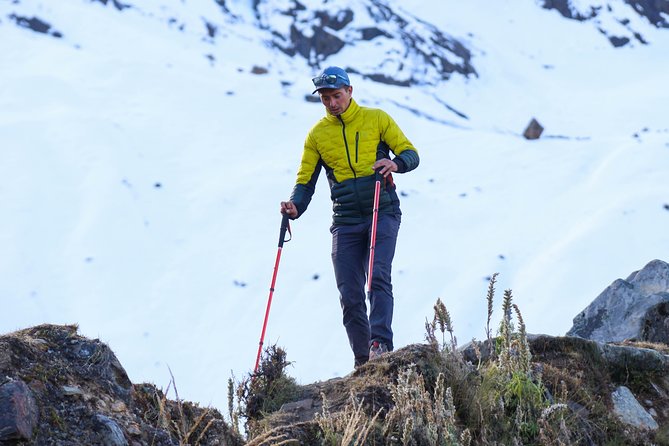
Reviewed · SALKANTAY TREKS
Salkantay Trek Standard 5D/4N
Salkantay’s big draw is the change of scenery under your own power: you begin among high Andean peaks, cross a 4,600-meter pass, descend through cloud forest, and finish at Machu Picchu. It is a demanding five-day route, not a quick ride to a famous viewpoint.
I like that the trek includes Humantay Lake and a guided visit to Machu Picchu, two major highlights on one route. I also like the small-group limit of 15 and the practical support: a guide, cook, camping gear transport, meals, and several transfers are part of the plan. The main caution is altitude and effort, especially on the first two days, plus a strict no-refund cancellation policy.
- Humantay Lake on Day 1: Reach the turquoise lake at about 4,200 meters after starting from Soraypampa.
- Salkantay Pass at 4,600 meters: The trek’s highest point comes on Day 2, after roughly three hours of uphill walking.
- A real change in climate: Descend from high mountain country into cloud forest, streams, and warmer coffee-growing country.
- Three nights camping, one night in Aguas Calientes: You get a proper bed before the Machu Picchu visit, but most nights are outdoors.
- Some costs remain yours: The bus between Aguas Calientes and Machu Picchu, sleeping bag, walking poles, and optional activities are not included.
- A 4.8 rating from 48 assessments: The tour is recommended by 94% of participants, though the route and non-refundable terms still deserve a close look.
A five-day route from high peaks to Machu Picchu
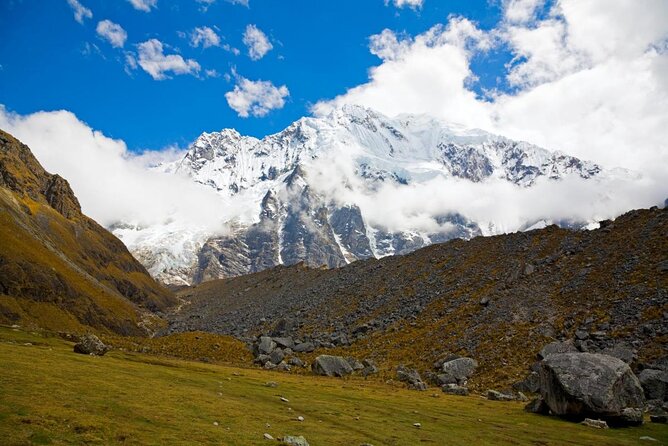
The Salkantay Trek Standard is for you if you want the journey to matter as much as the destination. Instead of reaching Machu Picchu by train alone, you cross high mountain terrain, spend time in the forest, and approach the final town on foot. The route takes five days and four nights, with three nights camping and the fourth in a hostel in Aguas Calientes.
The effort is real. Day 1 reaches about 4,200 meters at Humantay Lake, and Day 2 climbs to the 4,600-meter Salkantay Pass. You then spend several days walking downhill or across changing terrain before arriving at Machu Picchu. If you are not used to altitude or long walks, give yourself time in Cusco to adjust before setting out.
The group is limited to 15, which should make it easier to stay connected with your bilingual guide and ask questions along the way. A cook and assistants handle meals and camp support, while horsemen and horses carry camping equipment at the start. The route is not a luxury trek, but the included help means you do not need to organize every meal and transfer yourself.
Day 1: Humantay Lake and the first camp
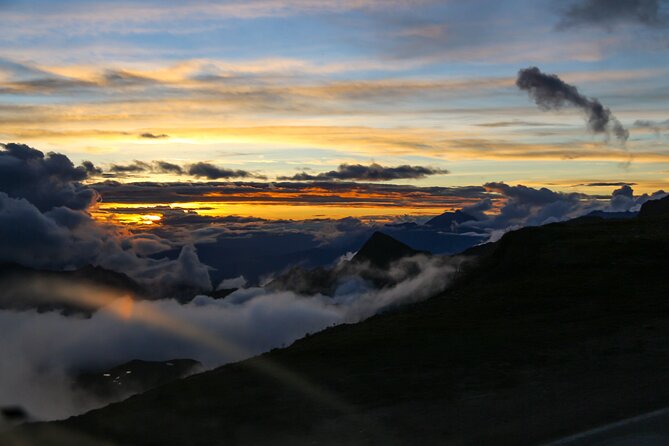
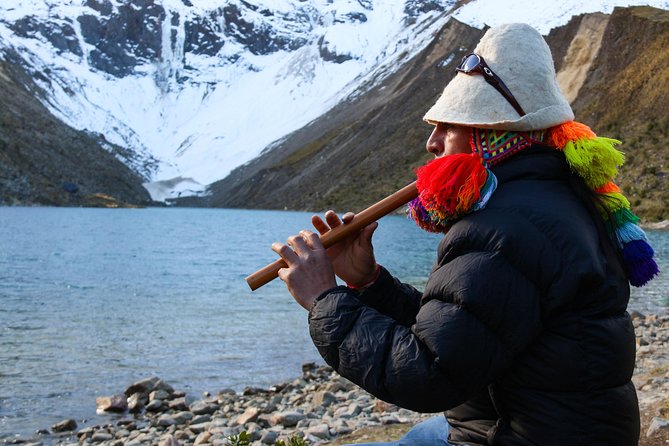
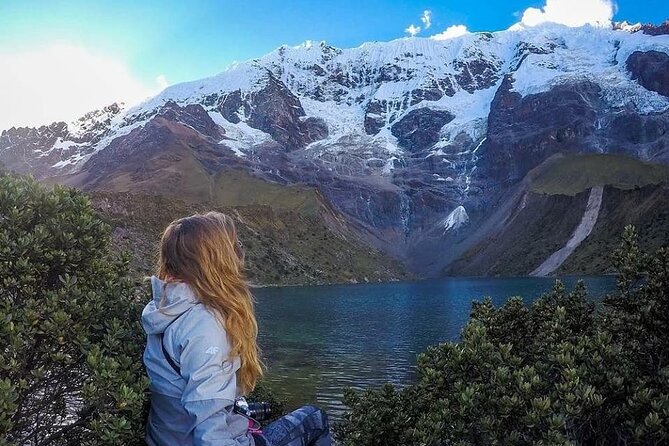
The day starts early, with pickup in Cusco and breakfast in Mollepata before you continue to Soraypampa, at about 3,900 meters. There you meet the horsemen and horses carrying camping equipment, then set off toward Humantay Lake. The lake sits at roughly 4,200 meters, so even this first outing can feel harder than its distance suggests.
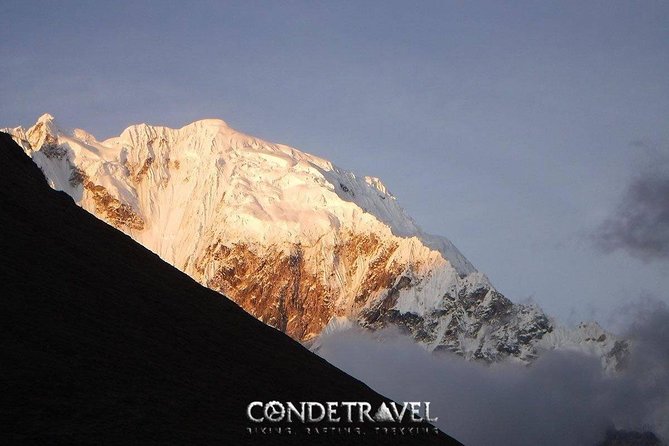
The lake visit is a striking opening to the trek, with a high mountain setting that gives you an immediate sense of the scale of the Andes. After time there, you return to Soraypampa for lunch prepared by the cook. From there, the route continues to Salkantaypampa, your first base camp, with views of the snowy Salkantay peak.
Afternoon tea and dinner are served at camp. That first evening is a useful chance to settle into the routine: eat, rest, and prepare for the next day’s climb. Keep expectations practical. You are sleeping in a camp at altitude, not checking into a hotel, and the early start plus the lake hike makes Day 1 a substantial introduction.
More Salkantay treks around Cusco:
- Salkantay Trek Challenge – 3 Days / 2 Nights
★ 5.0 · 101 reviews - Small Group 5 Days Salkantay and Machu Picchu by Llactapata Tour
★ 5.0 · 88 reviews - Machu Picchu: 5-Day Salkantay Trek with Panoramic Train
★ 5.0 · 79 reviews
Day 2: The high point at Salkantay Pass
A cup of coca tea and breakfast begin the day, followed by the ascent to Salkantay Pass. The climb takes about three hours and tops out at 4,600 meters, the highest point of the trek. The altitude is the main challenge here. Walk steadily, follow your guide’s pace, and do not treat the pass as a race.
After reaching the pass, you head toward Wayrac Machaq for lunch. The route then drops into the high jungle, where the surroundings change from open mountain country to streams, large trees, bromeliads, and orchids. This descent is part of the appeal: the trek does not stay in one type of scenery, and the vegetation becomes more prominent as you lose elevation.
The day is listed as an eight-hour walking day, so plan for a long stretch on your feet. The change in altitude and terrain can make the hours feel different from one another, but this is still a demanding day. Your second night is at a campsite farther down the route.
Day 3: Cloud forest, waterfalls, and coffee
Day 3 begins early with breakfast and about three hours of hiking through cloud forest. Rivers and waterfalls are among the sights along the way. After lunch, you walk for about three more hours to Lucmabamba campsite, where the surroundings shift toward warmer, greener country.
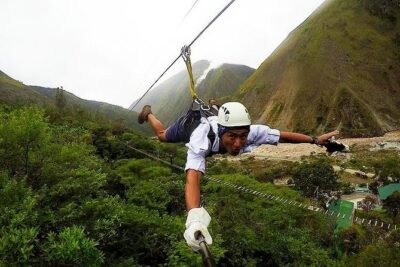
A coffee-plantation activity is offered at camp, with an explanation of the coffee process. It gives you a more grounded connection to the region than simply walking through it, and makes a welcome change from the steady rhythm of trail, meal, and camp. Ziplining is also possible if arranged in advance, but it costs extra and should not be assumed to be part of the standard package.
Cocalmayo hot springs are another possible add-on, about 30 minutes from camp. Transportation and entrance fees are not included, and the activity needs to be organized separately. If this appeals to you, ask about arrangements before the trek rather than counting on fitting it in spontaneously.
Day 4: Llactapata views and the walk to Aguas Calientes
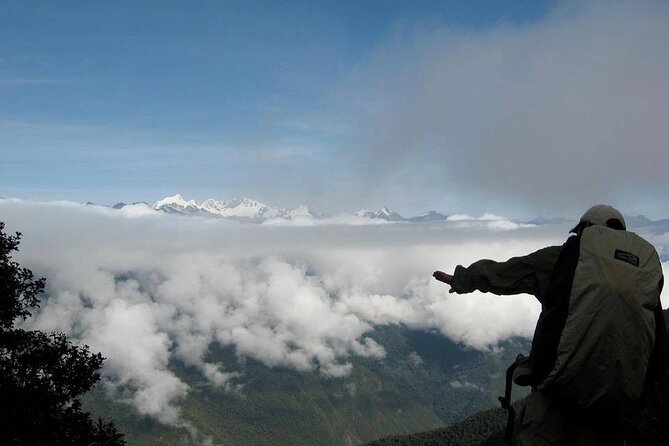
After breakfast, you hike uphill to Llactapata, where the route offers views toward Machu Picchu and the surrounding terrain. This is a rewarding preview of the destination, though it is not the same as entering the archaeological site. From Llactapata, the route descends to Hydroelectric, where you stop for lunch.
The walk continues for about three hours from Hydroelectric to Aguas Calientes. By now, you have had several days of sustained walking, so this final stretch may feel longer than its timing suggests. The night is spent in a hostel in town, a welcome break from camping before the early visit to Machu Picchu.
This is the only included night in a hostel, so think of it as a practical pause rather than a hotel stay. Your package includes one night’s lodging, but the description does not specify room type or amenities. If those details matter to you, confirm them with Conde Travel before booking.
More hikes and treks around Cusco:
- From Cusco: 7 Lakes Ausangate Trek with Breakfast and Lunch
★ 4.8 · 360 reviews - Cusco: Rainbow Mountain Tour and Red Valley Hike (Optional)
★ 4.7 · 149 reviews - Cusco: Full-Day Rainbow Mountain & Red Valley Trekking Tour
★ 4.5 · 121 reviews - From Cusco: Rainbow Mountain Trek
★ 4.5 · 98 reviews
Day 5: Machu Picchu and the return to Cusco
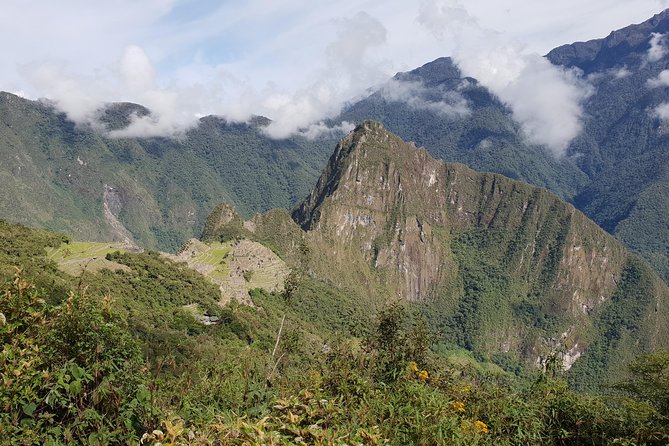
The final morning starts early, with buses up to Machu Picchu for sunrise. The bus fare is not included, so set aside money for the ride in either direction if you want to use it. A private guide leads your visit inside the site, giving you a structured way to explore after several days of walking.
Entrance to Machu Picchu is included, but entry to Huayna Picchu or Machu Picchu Mountain is not. Those are separate options, not automatic extensions of the guided visit. If you have your heart set on either one, check availability and arrangements before committing to the trek.
After the visit, you take the train from Aguas Calientes to Ollantaytambo, followed by transport to Cusco. The listed inclusions cover that train and the onward transport. The day ties together a strenuous walking route and one of Peru’s best-known archaeological sites, so it is a full finish rather than a relaxed travel day.
What the package covers, and what it leaves out
The practical value lies in having the main moving parts arranged. The package includes transport from Cusco to Mollepata, entrance fees to Machu Picchu, a guide, cook and assistants, camping dining equipment, a first aid kit, three camping nights, one hostel night, and the return train to Ollantaytambo plus transport to Cusco.
Meals are included on four days: four breakfasts, four lunches, and four dinners. That helps keep the trek’s daily routine simple, but it does not mean every meal across the five days is covered. Check the schedule with the operator if you want to know exactly which meal is provided on each day.
You must bring or arrange a sleeping bag and walking poles if you want them. The bus between Aguas Calientes and Machu Picchu is extra, as are ziplining, Cocalmayo’s transport and entrance fees, and entry to Huayna Picchu or Machu Picchu Mountain. These add-ons can affect the real cost, so compare the full expected spend rather than judging value by the tour price alone.
No price is provided here, so I cannot say whether the package is a bargain at its current rate. Its value depends on how much you would otherwise spend arranging a guide, cook, meals, camps, entrance fee, train, and transfers separately. If you prefer to organize every component yourself, the bundled approach may be less useful. If you want to focus on the walk and leave much of the coordination to a local operator, the inclusions are meaningful.
Altitude, effort, and the no-refund risk
The first two days reach high elevations, with the pass at 4,600 meters. Even fit walkers can feel the effect of altitude, and the route also involves several long days on foot. You should be comfortable with sustained hiking and willing to spend three nights camping. The supplied information does not give daily distances or detailed trail conditions, so ask the operator for those specifics if they will shape your decision.
The activity begins at 4:00 a.m. at Portal de Comercio 145 in Cusco, although the first-day plan also describes hotel pickup. Confirm the exact pickup arrangement and location before departure, so you are not sorting out meeting details in the dark.
Cancellation terms deserve serious attention. The experience is non-refundable and cannot be changed for any reason. One customer withdrew during a period of transport strikes and unrest, saying a refund was refused; Conde Travel responded that the cancellation came too close to departure and said it offered a voucher. The written terms are strict, so do not book unless you can accept the possibility of losing the payment if your plans change.
Who should choose this trek?
This route suits you if you want a multi-day walking approach to Machu Picchu, enjoy changing scenery, and are comfortable with basic camping. It is also a sensible fit if you value having meals, a bilingual guide, camp support, and major transfers arranged in one package. The group cap of 15 keeps the scale manageable without making this a private trip.
It is a poorer fit if you want a low-effort visit, need flexible dates, or would be uneasy sleeping outdoors. The early starts, high elevations, and long walking days are not minor details. You may prefer a shorter route or a direct train visit if the trek itself is not a central part of what you want.
The overall rating is 4.8 out of 5 from 48 assessments, and 94% recommend the experience. That is encouraging, but the right call still depends on your fitness, altitude tolerance, budget for extras, and willingness to accept the strict cancellation terms.
Should you book the Salkantay Trek Standard?
Book it if you want Machu Picchu to be the final chapter of a demanding Andean trek, not a stand-alone day trip. Humantay Lake, the Salkantay Pass, the cloud forest, and the guided visit make for a varied five-day route, with meals and much of the transport handled for you.
Before paying, confirm what you need to bring, the exact pickup plan, your hostel arrangements, and the extra cost of the Machu Picchu bus. Most important, be sure you can commit to the date. If the altitude, camping, or non-refundable terms give you pause, choose a more flexible way to reach Machu Picchu.
FAQ
How long is the Salkantay Trek Standard?
The trek lasts five days and four nights, with three nights camping and one night in a hostel in Aguas Calientes.
What is the highest point of the trek?
Salkantay Pass is about 4,600 meters above sea level. Humantay Lake is visited at about 4,200 meters.
Is the Machu Picchu entrance fee included?
Yes. The entrance fee to Machu Picchu is included. Entry to Huayna Picchu and Machu Picchu Mountain is not included.
Is the bus from Aguas Calientes to Machu Picchu included?
No. The bus up or down between Aguas Calientes and Machu Picchu is not included.
What transport is included on the return to Cusco?
The package includes a train from Aguas Calientes to Ollantaytambo and transport from Ollantaytambo to Cusco.
Are meals included?
The package includes four breakfasts, four lunches, and four dinners.
Can I cancel and receive a refund?
No. The experience is non-refundable and cannot be changed for any reason.
Just added around Cusco
- Zipline over the Sacred Valley Trip★ 5.0 · 11 reviews
- Visit Pisac from Cusco: Private Transport★ 4.6 · 9 reviews
- TRIP FROM PUNO TO CUSCO WITH THE ROUTE OF THE SUN★ 4.7 · 16 reviews
- Vinicunca Mountain Tour – Full Day Tour to Rainbow Mountain★ 3.4 · 4 reviews
- Valle Sur Cusco | half day★ 4.3 · 3 reviews
- Trek to Choquequirao 4 days★ 3.8 · 4 reviews
- Trek to Humantay Lake from Cusco★ 4.9 · 8 reviews
- Exclusive Huayna Picchu Tour in 1 Day from Cusco★ 5.0 · 31 reviews
Salkantay Treks, compared.
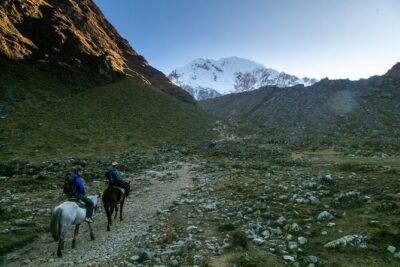
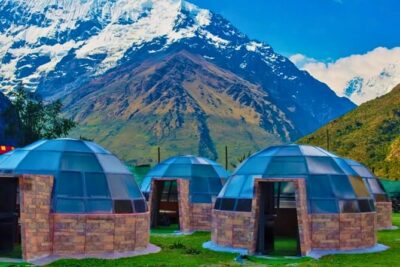
Small Group 5 Days Salkantay and Machu Picchu by Llactapata Tour
Read our review →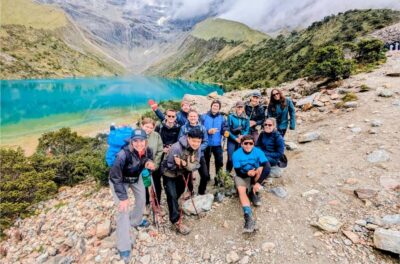
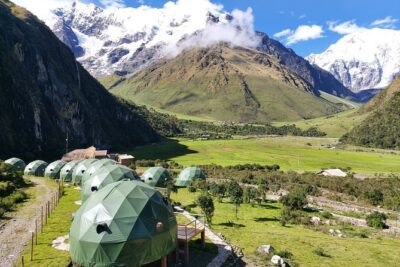
Salkantay Trek 4 Days to Machu Picchu by Glamping Sky Lodge Dome
Read our review →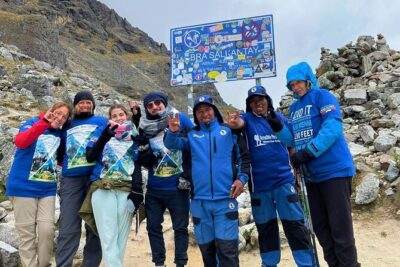
5-Day: Salkantay Trek to Machupicchu and Humantay Lake
Read our review →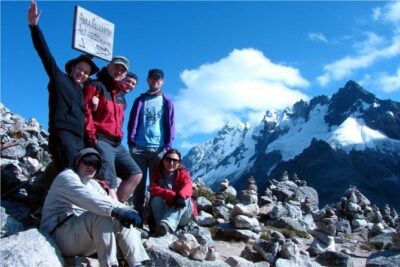
Salkantay Trek to Machu Picchu 5D/4N or 4D/3N by glamping
Read our review →Browse the lists this tour appears in